
Shader Compilation in Games: The Hidden Graphics Technology Shaping Modern Game Performance
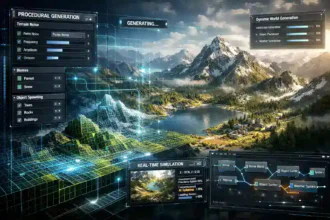
Modern video games rely on an extraordinary stack of technologies to deliver the detailed worlds, dynamic lighting, and realistic materials players experience today. Behind every reflective surface, shadow, particle effect, and animated character lies a complex process executed by the graphics processing unit. One of the most critical yet often overlooked parts of this pipeline is Shader Compilation in Games.
While players often discuss frame rates, graphics cards, or game engines, shader compilation quietly determines how efficiently visual data is translated into images on the screen. When this system is optimized correctly, gameplay appears smooth and responsive. When it is not, players may experience sudden performance drops or the well-known phenomenon of shader stutter. Understanding Shader Compilation in Games reveals how modern game graphics actually work behind the scenes and why developers invest significant effort into managing this process.
This technology has become increasingly important as games adopt physically based rendering, real-time lighting systems, and massive open worlds. Modern titles can contain tens of thousands of shader variations, all of which must be prepared for the graphics hardware before they can render objects correctly. Without a reliable shader compilation system, even the most powerful GPU would struggle to process modern graphics pipelines efficiently.
The Role of Shaders in Modern Game Graphics
To understand the importance of Shader Compilation in Games, it is necessary to first understand what shaders are and why they exist in modern graphics pipelines. In simple terms, a shader is a small program that runs on the GPU and determines how pixels and vertices should appear on the screen. These programs control how light interacts with surfaces, how textures are applied, and how various visual effects are rendered.
Every visual element in a modern game relies on shaders. Materials such as metal, glass, skin, water, or terrain all require specialized shader programs to calculate their appearance under different lighting conditions. Even subtle details like reflections, ambient occlusion, or motion blur are handled through shader instructions executed by the GPU.
Because games contain thousands of objects and lighting scenarios, the number of shaders required can grow rapidly. Each combination of lighting conditions, material properties, and rendering features may require a different shader variation. Managing these variations efficiently is where Shader Compilation in Games becomes essential.
Understanding the Shader Compilation Process
Shader programs are not written directly in the low-level language understood by the GPU. Instead, developers write shaders using high-level shading languages such as HLSL or GLSL. These languages allow artists and programmers to describe visual behavior in a more readable form. However, before a shader can run on the graphics hardware, it must be converted into a format optimized for the GPU architecture.
This conversion process is known as shader compilation. During compilation, the shader code is translated into machine-level instructions that the GPU can execute efficiently. The compiler also performs optimizations, removing unnecessary operations and adapting the code to the specific capabilities of the graphics hardware.
The complexity of this process is one of the main reasons why Shader Compilation in Games plays such a critical role in performance. A poorly compiled shader can introduce inefficiencies that slow down rendering, while a well-optimized shader ensures that the GPU can process graphics workloads smoothly.
Runtime Compilation and Real-Time Rendering
In many games, shaders are compiled dynamically during gameplay. This process is known as runtime shader compilation. When the game encounters a visual situation that requires a shader not yet prepared for the GPU, the engine must compile it before the object can be rendered properly.
Although this approach allows developers to support complex rendering features, it can also introduce performance interruptions. During runtime compilation, the CPU and GPU may pause briefly while the shader is prepared, leading to visible frame drops or micro-stutters. These moments can break immersion, particularly in fast-paced games where smooth performance is essential.
Because of this challenge, developers design sophisticated systems to manage Shader Compilation in Games more efficiently. These systems attempt to compile shaders in advance or store compiled versions so they can be reused later without repeating the expensive compilation process.
Shader Variations and Rendering Complexity
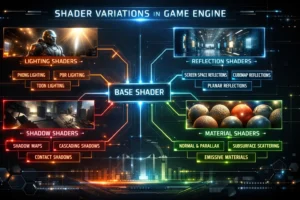
One of the biggest challenges in modern rendering pipelines is the explosion of shader variations. A single material may require multiple versions of its shader depending on different graphical settings, lighting conditions, or rendering techniques enabled in the game.
For example, a material shader might need separate versions depending on whether shadows, reflections, or global illumination systems are active. Each variation must be compiled independently, creating a large library of shader programs that the engine must manage carefully.
This complexity explains why Shader Compilation in Games has become an active area of optimization for game developers. Efficient shader management ensures that the GPU always has access to the correct shader without causing noticeable delays during gameplay.
The Relationship Between GPU Drivers and Shader Compilation
Graphics drivers play an important role in shader compilation. GPU manufacturers provide driver-level compilers that translate shader code into hardware-specific instructions optimized for each GPU architecture. This means that the same shader may be compiled differently depending on the graphics card installed in a player’s system.
Companies such as NVIDIA and AMD provide development tools and documentation that help studios optimize shader performance across different hardware platforms. These tools allow developers to analyze compiled shaders and identify inefficiencies that could affect rendering speed.
Driver-level optimization is another reason why Shader Compilation in Games can vary from one system to another. Updates to GPU drivers sometimes improve shader performance significantly by introducing better compilation strategies or new hardware optimizations.
Shader Caching and Performance Stability
To reduce the impact of runtime compilation, many modern games implement shader caching systems. A shader cache stores compiled shaders on the player’s system so they can be reused later without repeating the compilation process. Once a shader has been compiled, the game can load it instantly during future sessions.
This technique helps stabilize performance and prevents repeated stuttering in frequently visited areas. Large open-world games especially benefit from caching because players often encounter similar rendering situations across different locations in the game world.
Interestingly, shader management systems often interact with other technologies that control how game resources are loaded during gameplay. For instance, systems responsible for loading world assets dynamically share similar performance challenges. Readers interested in the broader infrastructure behind modern open worlds can explore how resource loading works in Game Asset Streaming: The Technology That Powers Massive Open Worlds Without Loading Screens.
Both technologies aim to ensure that large amounts of graphical data can appear seamlessly during gameplay without interrupting the player experience. While asset streaming focuses on textures, models, and world data, Shader Compilation in Games ensures that the GPU knows exactly how those assets should be rendered once they appear on screen.
Game Engines and Shader Management Systems
Modern game engines include specialized systems designed to handle shader compilation efficiently. These systems attempt to anticipate which shaders will be required and prepare them ahead of time. By compiling shaders during loading screens or initial startup phases, engines can minimize interruptions during actual gameplay.
Documentation from Epic Games highlights how engines such as Unreal Engine maintain extensive shader pipelines to manage thousands of shader permutations. These pipelines analyze rendering features used by the game and generate only the shader variations that are necessary.
Efficient engine-level management significantly improves the reliability of Shader Compilation in Games. Instead of compiling shaders unpredictably during gameplay, the engine organizes compilation tasks strategically to reduce performance spikes.
As rendering technology continues to evolve, shader systems are becoming even more sophisticated. New techniques such as real-time ray tracing, advanced material systems, and procedural environments introduce additional layers of complexity. All of these features rely on carefully managed shader pipelines that must balance visual fidelity with stable performance.
Understanding how these systems operate provides insight into one of the most fundamental technologies behind modern graphics. Although most players never notice it directly, Shader Compilation in Games remains a cornerstone of real-time rendering, enabling the detailed worlds and visual effects that define contemporary gaming experiences.
Pipeline State Objects and Modern Rendering Systems
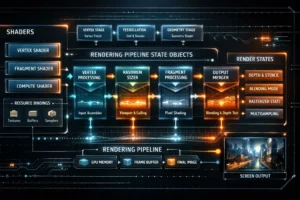
As real-time graphics became more complex, graphics APIs introduced new systems designed to manage rendering states more efficiently. One of the most important concepts in modern graphics programming is the Pipeline State Object, often abbreviated as PSO. This concept plays a major role in how engines organize Shader Compilation in Games and ensure that the GPU can process rendering commands efficiently.
A Pipeline State Object bundles together several rendering configurations required by the GPU. These include compiled shaders, blending modes, rasterization rules, and depth testing settings. Instead of assembling these configurations dynamically for every draw call, the engine prepares them in advance and stores them as reusable pipeline states.
This approach significantly improves performance stability. When a game engine organizes its rendering tasks around prebuilt pipeline states, it avoids unexpected pauses caused by compiling new shaders during gameplay. Because of this, PSO systems have become an essential part of how Shader Compilation in Games is managed in modern graphics APIs.
DirectX, Vulkan, and the Evolution of Shader Pipelines
Modern graphics APIs such as DirectX and Vulkan were designed to give developers more control over the rendering pipeline. Earlier APIs handled many shader operations automatically, but modern APIs expose more of the underlying process so developers can optimize performance directly.
One of the major goals of these APIs is to make Shader Compilation in Games more predictable. Instead of compiling shaders unpredictably during gameplay, developers are encouraged to compile them ahead of time and organize them into pipeline state objects. This approach allows the engine to load prepared rendering configurations instantly when needed.
The result is a rendering pipeline that behaves more consistently across different hardware systems. Although the underlying shader code may still be compiled differently depending on GPU architecture, structured pipelines help ensure that Shader Compilation in Games does not interrupt the flow of gameplay.
Shader Stutter and Player Experience
Despite the technological improvements introduced by modern engines and APIs, shader stutter remains a topic frequently discussed within gaming communities. This issue occurs when the game needs to compile a shader at the moment it is first required, causing a brief interruption in frame rendering.
In many situations, shader stutter appears when the player enters a new environment, encounters a new enemy type, or activates a visual effect that has not yet been compiled. At that moment, the system must finalize Shader Compilation in Games before the GPU can render the effect properly.
Even a short delay of a few milliseconds can create visible frame pacing problems. Players may experience sudden micro-freezes, particularly in open-world games where the engine constantly introduces new visual scenarios. Because modern titles rely heavily on dynamic lighting and material systems, the number of shaders involved in Shader Compilation in Games can be extremely large.
Strategies Developers Use to Reduce Shader Stutter
Game developers have introduced several techniques to reduce the impact of shader stutter. One of the most common methods is pre-compiling shaders during the initial launch of the game. Some titles display a “compiling shaders” screen when the game first starts, allowing the system to prepare a large portion of the required shader library before gameplay begins.
Another technique involves background compilation. In this method, the engine predicts which shaders will likely be needed soon and begins compiling them while the player continues exploring the game world. By performing Shader Compilation in Games gradually in the background, the engine avoids sudden performance spikes.
Shader caching systems also contribute to smoother gameplay. Once a shader has been compiled on a player’s system, the compiled version is stored locally. During future sessions, the engine loads the cached shader instead of repeating the entire compilation process. This greatly reduces the chances of repeated interruptions related to Shader Compilation in Games.
The Role of Game Engines in Shader Optimization
Modern game engines contain advanced shader management systems designed to handle large numbers of shader variations efficiently. Engines analyze which graphical features are enabled and compile only the necessary permutations required by the game’s rendering pipeline.
For example, if a game supports multiple lighting systems, material types, and environmental effects, the engine may need to prepare thousands of shader combinations. Efficient engine architecture ensures that Shader Compilation in Games remains organized and predictable rather than chaotic and performance-heavy.
Engines also track which shaders have already been compiled and reused. This intelligent reuse reduces redundant work and ensures that the GPU receives optimized instructions as quickly as possible. Without these systems, large modern games would struggle to manage the enormous scale of Shader Compilation in Games.
Large Game Worlds and Rendering Preparation
The scale of modern games introduces another layer of complexity. Open-world environments contain diverse locations, weather systems, lighting conditions, and materials that interact dynamically with the rendering pipeline. Every new combination of these factors may require unique shader configurations.
Because of this, efficient Shader Compilation in Games becomes essential for maintaining stable performance across vast environments. When players travel between cities, forests, caves, and weather systems, the engine must ensure that all necessary shaders are ready before they are needed.
This challenge is closely related to other systems that manage large amounts of data during gameplay. Technologies responsible for loading terrain, models, and textures dynamically must coordinate with shader systems so that newly loaded assets can be rendered immediately without delays.
The Future of Shader Compilation Technology
Rendering technology continues to evolve as game developers pursue higher levels of realism and visual fidelity. Techniques such as ray tracing, global illumination, and advanced material simulation place even greater demands on GPU pipelines. As these technologies grow more sophisticated, the complexity of Shader Compilation in Games will continue to increase.
Future engines are likely to rely on more advanced prediction systems capable of anticipating which shaders will be required long before they appear on screen. Machine learning tools and improved rendering pipelines may allow engines to schedule Shader Compilation in Games more intelligently, reducing visible performance disruptions even further.
Graphics APIs and GPU drivers are also evolving to provide more efficient shader management features. As hardware manufacturers refine their compilers and caching strategies, developers gain new tools that make Shader Compilation in Games faster and more reliable across different platforms.
Conclusion
Modern video games are built on layers of complex technologies working together to create seamless visual experiences. Among these systems, Shader Compilation in Games plays a fundamental role in translating artistic assets and lighting models into images that the GPU can render efficiently.
Although most players never see the process directly, it shapes how smoothly a game runs and how quickly new visual effects appear during gameplay. From shader caching systems to advanced pipeline state objects, developers continually refine their techniques to make Shader Compilation in Games more predictable and less disruptive.
As graphics technology continues to advance, shader pipelines will remain one of the most critical components of real-time rendering. Understanding the mechanics behind Shader Compilation in Games offers valuable insight into the invisible infrastructure powering the visual worlds that define modern gaming.