
Esports Integrity Systems: Anti-Cheat Technology, Tournament Rules, and Fair Play Infrastructure in Professional Esports
In modern competitive gaming, the success of professional tournaments does not depend only on player skill or team strategy. Behind every official match, there is a complex framework designed to guarantee fairness, prevent cheating, and maintain trust between players, organizers, and audiences. These frameworks are known as Esports Integrity Systems, and they represent one of the most critical components of the professional esports industry.
As esports evolved from small community competitions into a global entertainment industry, the need for reliable Esports Integrity Systems became essential. Large tournaments, international leagues, and multi-million-dollar prize pools require strict control mechanisms to ensure that results are legitimate and that every participant follows the same rules. Without strong integrity infrastructure, professional esports could not maintain credibility or attract sponsors, publishers, and global audiences.
The development of Esports Integrity Systems involves multiple layers of technology and regulation, including anti-cheat software, tournament rule enforcement, server validation, referee supervision, and broadcast monitoring. Each layer works together to create a secure competitive environment similar to traditional sports leagues, where fairness is protected by both technology and human oversight.
The Role of Integrity Infrastructure in the Professional Esports Industry
In the early days of competitive gaming, tournaments were often organized by small communities without strict rules or advanced monitoring tools. As the industry grew, organizers realized that professional competition required standardized regulations and secure technical environments. This need led to the creation of modern Esports Integrity Systems, which are now used in almost every major tournament.
Professional leagues managed by large organizations operate under detailed rulebooks that define acceptable behavior, hardware requirements, network conditions, and penalties for violations. These rules are enforced through integrity systems that monitor matches in real time and allow officials to detect irregular activity immediately.
The importance of structured competition environments was also highlighted in the growth of organized leagues discussed in
Inside the Professional Esports Ecosystem: Infrastructure, Organizations, and the Competitive Gaming Industry
,
where tournament organizers, publishers, and teams rely on standardized systems to maintain professional standards.
Anti-Cheat Technology as a Core Component of Esports Integrity Systems
One of the most visible parts of modern Esports Integrity Systems is anti-cheat technology. Competitive games use advanced software to detect unauthorized modifications, memory manipulation, automation tools, and external programs that could give players unfair advantages.
Anti-cheat systems operate at different levels depending on the game and the tournament. Some systems run inside the game client, while others operate at the operating system level to monitor suspicious behavior. These tools analyze player input, system processes, and network communication to identify patterns that indicate cheating.
Large publishers often develop their own anti-cheat solutions to protect official competitions. Examples of such systems can be seen in major competitive titles supported by organizations like
Riot Games
and
Valve
,
which maintain strict rules for professional tournaments to ensure competitive fairness.
Without reliable anti-cheat protection, professional events could lose credibility quickly, which is why anti-cheat software remains one of the most important layers of modern Esports Integrity Systems.
Server Validation and Network Control in Official Tournaments
Another critical element of Esports Integrity Systems is server validation. Professional matches are usually played on dedicated tournament servers that are controlled by organizers rather than players. This prevents manipulation of game settings, network conditions, or data synchronization.
Tournament servers are configured to ensure identical conditions for both teams. Latency limits, tick rates, and hardware settings are standardized to avoid unfair advantages. In many cases, players are required to compete on offline LAN environments where network traffic can be fully controlled.
Server monitoring tools track every action performed during a match, allowing officials to review suspicious situations if a dispute occurs. These systems also create detailed logs that can be used for investigation, ensuring that Esports Integrity Systems remain transparent and reliable.
Rule Enforcement and Referee Supervision in Competitive Matches
Technology alone cannot guarantee fairness in professional esports. Human supervision is another essential part of Esports Integrity Systems. Official referees, administrators, and technical staff monitor matches to make sure players follow tournament rules.
Referees verify equipment, check player accounts, confirm team rosters, and supervise the match environment before competition begins. During the match, they observe gameplay and communicate with technical teams if any irregularities appear.
Rule enforcement also includes penalties for violations such as unsportsmanlike behavior, unauthorized communication, or attempts to exploit game mechanics. These regulations are similar to those used in traditional sports leagues, where referees ensure that competition remains fair.
Tournament structures and rule systems are often connected to the competitive formats discussed in
Mapping the Esports Formats Taxonomy: Competitive Structures, Tournament Models, and the Architecture of Modern Esports
,
where integrity rules must adapt to different match types and tournament models.
Match Monitoring and Data Review Systems
Modern Esports Integrity Systems also include advanced monitoring tools that record gameplay data, player actions, and match statistics. These systems allow officials to review matches after they finish, making it possible to investigate suspicious situations with high precision.
Monitoring platforms often display real-time information about player performance, system status, and network conditions. This level of control helps tournament administrators detect problems quickly and maintain consistent competitive standards across all matches.
Data monitoring technology is closely related to performance tracking tools used by professional teams, which were explored in
The Hidden Intelligence of Competitive Gaming: Esports Performance Analytics Systems Powering Modern Teams
.
While analytics focuses on improving performance, integrity monitoring focuses on protecting fairness.
Identity Verification and Player Authentication
Professional tournaments must also verify that every participant is using the correct account and identity. Player authentication is another key layer of Esports Integrity Systems, especially in online qualifiers and remote competitions.
Organizers use account verification, hardware checks, and camera supervision to confirm that players follow the rules. In offline events, players compete on tournament-provided computers to eliminate the risk of unauthorized software.
These procedures protect the legitimacy of results and prevent issues such as account sharing, impersonation, or unauthorized substitutions. As esports continues to grow globally, identity verification remains an essential part of reliable Esports Integrity Systems.
Broadcast Protection and Anti-Stream Sniping Measures
As professional tournaments became global live events, organizers discovered that competitive fairness could be affected not only by cheating software, but also by information leaks during live broadcasts. Because esports matches are streamed to millions of viewers, players could theoretically gain unfair advantages by watching delayed feeds or receiving outside information. To prevent this, modern Esports Integrity Systems include broadcast protection and anti-stream sniping measures.
Tournament organizers use broadcast delay technology to ensure that live streams are shown to viewers several seconds after the actual gameplay occurs. This delay prevents players or coaches from accessing real-time information that could influence decisions during a match. In online competitions, additional monitoring tools are used to detect unusual communication or suspicious behavior.
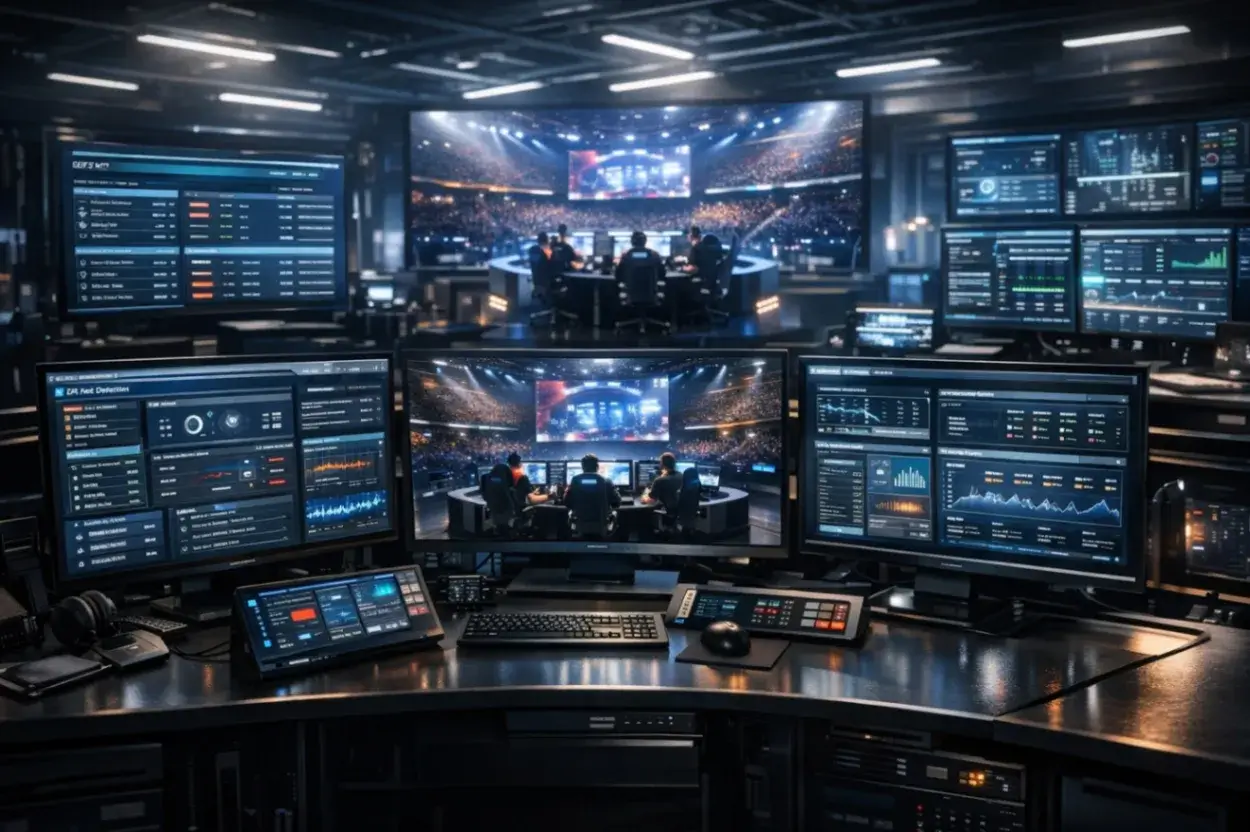
Broadcast control rooms also operate as part of Esports Integrity Systems, where technical staff monitor live feeds, server data, and referee communication simultaneously. These control centers allow organizers to react immediately if a problem occurs, maintaining the professional standard expected in modern esports.
Hardware Control and Tournament Equipment Standards
Another important layer of Esports Integrity Systems is hardware control. In professional events, players are not allowed to use personal computers or unverified equipment. Instead, tournament organizers provide standardized hardware configured to meet official requirements.
Using controlled hardware ensures that no player has access to hidden software, modified drivers, or performance advantages. Tournament PCs are checked before every match, and peripherals such as keyboards, mice, and headsets are inspected to confirm that they comply with tournament rules.
Hardware inspection may seem like a small detail, but it plays a major role in maintaining fair competition. Without strict equipment standards, even minor differences in performance or software configuration could affect match results. Because of this, hardware validation remains a permanent part of professional Esports Integrity Systems.
Online Tournament Integrity and Remote Competition Challenges
While offline LAN events provide the highest level of control, many qualifiers and regional competitions are held online. This creates additional challenges for Esports Integrity Systems, since organizers cannot physically supervise every player.
To solve this problem, tournament platforms use remote monitoring tools, account verification systems, and automated anti-cheat detection. Players may be required to keep cameras active during matches, share system information, or use special tournament clients that restrict unauthorized software.
Online competition integrity became even more important as the global esports scene expanded, allowing players from different countries to participate in the same events. Without reliable Esports Integrity Systems, online tournaments could not maintain the same level of trust as offline competitions.
Dispute Resolution and Match Investigation Procedures
Professional tournaments must be prepared to handle disputes between teams, players, or officials. For this reason, modern Esports Integrity Systems include formal investigation procedures that allow organizers to review match data, server logs, and video recordings.
If a team reports suspicious behavior, administrators can analyze gameplay frame by frame, check communication records, and examine anti-cheat reports. Because every official match is recorded and logged, it is possible to reconstruct events with high accuracy.
This level of transparency helps maintain confidence in tournament results. Teams know that if a problem occurs, it can be reviewed using objective data rather than personal opinions. As esports prize pools and sponsorship deals continue to grow, reliable dispute resolution remains one of the most important functions of Esports Integrity Systems.
International Regulations and Esports Governing Bodies
As the competitive gaming industry became global, several organizations began working on standard rules for professional tournaments. These organizations help define fair play policies, player conduct guidelines, and disciplinary procedures that support modern Esports Integrity Systems.
Groups such as the
International Esports Federation
promote unified competition standards across different regions. While each publisher controls its own game, international guidelines help tournament organizers maintain consistent rules for professional events.
Cooperation between publishers, leagues, and governing bodies ensures that Esports Integrity Systems continue to evolve as new technologies and new competitive formats appear in the industry.
Security, Fair Play, and the Future of Competitive Gaming
The future of professional esports depends heavily on the strength of its integrity infrastructure. As competitions become larger and more complex, organizers must continue improving Esports Integrity Systems to protect players, teams, sponsors, and audiences.
New technologies such as advanced behavioral analysis, machine learning detection, and secure tournament networks are already being tested to make competitions even more reliable. These tools can identify suspicious patterns faster than manual review, helping officials respond to problems before they affect match results.
Fair play is not only a technical requirement but also a business necessity. Sponsors and media partners expect tournaments to operate under strict rules, and viewers want to trust that every match is decided by skill rather than unfair advantages. Because of this, investment in Esports Integrity Systems will remain essential for the long-term stability of the esports industry.
Conclusion
Professional competition cannot exist without trust, and trust in esports is built through strong and reliable Esports Integrity Systems. From anti-cheat software and server validation to referee supervision and broadcast protection, every layer of integrity infrastructure plays a role in keeping competitive gaming fair.
As the esports industry continues to grow, integrity technology will become even more advanced, ensuring that tournaments remain credible and that players compete under equal conditions. The development of modern Esports Integrity Systems shows that professional gaming is no longer just entertainment, but a structured competitive environment supported by technology, regulation, and global standards.