Real-Time Ray Tracing in Modern Gaming: Revolutionizing Visual Fidelity and Performance
The pursuit of visual realism has always driven innovation in the gaming industry. From the early days of simple pixel-based graphics to the cinematic environments found in modern titles, developers constantly search for technologies capable of pushing visual boundaries. Among the most transformative innovations in recent years is Real-Time Ray Tracing, a rendering technology that dramatically changes how lighting, reflections, and shadows are simulated in video games.
Unlike traditional rendering techniques that rely heavily on approximations, Real-Time Ray Tracing attempts to simulate how light behaves in the real world. By tracing the path of light rays as they interact with virtual objects and surfaces, this technology enables unprecedented visual fidelity. Modern gaming hardware and engines now support Real-Time Ray Tracing, making it possible for developers to create environments that look far more immersive and physically accurate than ever before.
As gaming hardware evolves and rendering engines become more sophisticated, Real-Time Ray Tracing is increasingly becoming a cornerstone of modern game graphics. This technology does not simply enhance visuals—it fundamentally transforms the way lighting systems are designed within game engines. Understanding its underlying principles, benefits, and performance implications provides valuable insight into the future of gaming technology.
The Evolution of Lighting in Game Graphics
Before the arrival of Real-Time Ray Tracing, most video games relied on rasterization-based rendering pipelines. Rasterization is extremely efficient and has powered real-time graphics for decades. However, it requires numerous approximations to simulate lighting effects such as reflections, ambient occlusion, and global illumination.
Developers often relied on techniques like baked lighting, cube maps, and screen-space reflections to mimic realistic lighting conditions. While these methods can produce visually convincing results, they are limited in dynamic environments where lighting conditions change frequently. As game worlds grow larger and more complex, these traditional methods become harder to manage and less visually accurate.
The introduction of Real-Time Ray Tracing provides a more physically accurate solution. Instead of relying solely on precomputed lighting, the rendering system dynamically calculates how light interacts with objects in the scene. This allows developers to achieve natural reflections, realistic shadows, and complex light interactions without relying entirely on pre-baked data.
For example, when a light source shines onto a reflective surface such as glass or water, Real-Time Ray Tracing calculates how the light reflects and refracts in real time. The result is a far more natural image that reacts dynamically to movement and environmental changes.
How Real-Time Ray Tracing Works

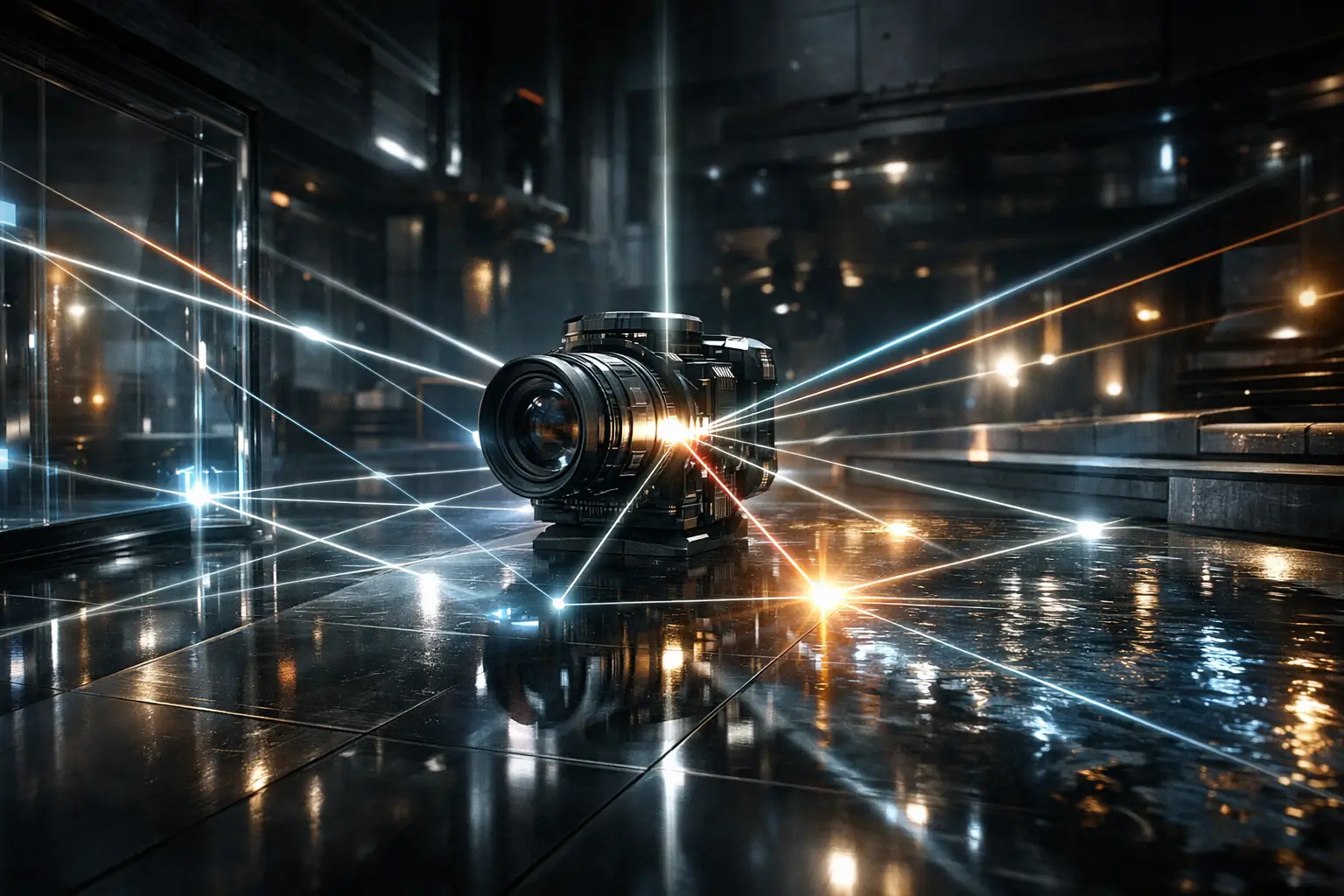
At its core, Real-Time Ray Tracing simulates the behavior of light rays within a virtual environment. The process begins when rays are projected from the virtual camera into the scene. These rays interact with objects, surfaces, and materials, determining how light should behave at each intersection point.
When a ray hits a surface, the rendering engine calculates several possible interactions. The ray may reflect off the surface, pass through it, or scatter depending on the material properties. These interactions are recursively traced to simulate complex lighting effects such as reflections, refractions, and global illumination.
In traditional offline rendering used in film production, ray tracing has been used for decades. However, the process is extremely computationally intensive. Achieving the same level of realism in interactive applications required massive improvements in GPU performance and specialized hardware acceleration.
Modern graphics processors now include dedicated ray tracing cores that accelerate the calculations required for Real-Time Ray Tracing. These hardware advancements allow game engines to perform billions of ray calculations per second while maintaining playable frame rates.
Major engines such as Unreal Engine and Unity now integrate Real-Time Ray Tracing directly into their rendering pipelines, enabling developers to create visually rich environments without building entirely custom rendering systems from scratch.
Realistic Reflections and Global Illumination

One of the most noticeable benefits of Real-Time Ray Tracing is the dramatic improvement in reflections. Traditional reflection techniques often rely on screen-space information, which limits reflections to objects visible within the camera view. This can lead to visual artifacts or missing reflections.
With Real-Time Ray Tracing, reflections are calculated based on the full 3D scene. This means objects outside the camera frame can still appear in reflections, creating a far more convincing visual result. Surfaces such as polished floors, metallic objects, and water bodies benefit significantly from this capability.
Another major advantage is realistic global illumination. In the real world, light does not simply travel directly from a light source to an object. Instead, it bounces between surfaces, distributing color and brightness throughout the environment. Simulating this complex interaction in real time has historically been extremely challenging.
Through Real-Time Ray Tracing, developers can approximate these light bounces dynamically, producing natural-looking indoor environments, subtle color bleeding between surfaces, and realistic ambient lighting conditions.
Hardware Acceleration and GPU Innovation
The rise of Real-Time Ray Tracing would not have been possible without major advancements in graphics hardware. Modern GPUs include specialized units designed specifically to accelerate ray tracing operations. These units dramatically reduce the computational cost of ray intersection calculations.
Graphics architectures from major manufacturers now integrate hybrid rendering pipelines that combine rasterization and Real-Time Ray Tracing. Rasterization handles the majority of geometry rendering, while ray tracing is selectively applied to lighting, reflections, and shadows where realism is most important.
This hybrid approach allows developers to balance visual fidelity with performance, ensuring that games remain playable even when advanced lighting techniques are enabled.
The Role of Game Engines in Ray Tracing Adoption
Game engines play a crucial role in bringing Real-Time Ray Tracing to modern game development. Engine-level support allows developers to integrate advanced lighting systems without building complex rendering frameworks from the ground up.
Many modern engines now provide built-in ray tracing features that automate several complex processes. Developers can enable ray traced reflections, shadows, or global illumination through engine settings, dramatically simplifying production workflows.
These rendering pipelines often work alongside other important technologies used in modern graphics systems. For example, shader management and optimization remain essential components of the rendering process. If you want to explore how shader systems influence performance, you can read our related analysis:
Shader Compilation in Games: The Hidden Graphics Technology Shaping Modern Game Performance.
Similarly, modern game engines frequently combine advanced lighting techniques with efficient world streaming systems. Large open-world environments require technologies capable of delivering massive amounts of data dynamically. Our detailed article on
Game Asset Streaming: The Technology That Powers Massive Open Worlds Without Loading Screens
explains how streaming systems enable seamless world exploration alongside advanced graphics technologies.
Together, these innovations form the foundation of modern real-time rendering systems where Real-Time Ray Tracing plays an increasingly important role in shaping the visual identity of next-generation games.
Performance Challenges and Optimization Strategies
Despite the remarkable visual improvements offered by Real-Time Ray Tracing, implementing the technology in modern games presents significant performance challenges. Simulating the physical behavior of light requires complex calculations that must occur within extremely tight time constraints. Unlike pre-rendered film production pipelines, video games must process graphics in real time while maintaining smooth frame rates.
To address these challenges, developers often rely on hybrid rendering techniques that combine traditional rasterization with Real-Time Ray Tracing. In this approach, rasterization continues to handle the majority of geometry rendering tasks, while ray tracing is selectively applied to specific visual elements such as reflections, shadows, or global illumination. This selective application allows games to benefit from advanced lighting realism without overwhelming the GPU.
Another important optimization technique involves limiting the number of rays cast per pixel. Instead of simulating every possible light interaction, developers strategically reduce ray counts and then use advanced denoising algorithms to reconstruct a visually smooth image. These denoising techniques analyze surrounding pixels to approximate missing lighting data while preserving visual accuracy.
Hardware innovations have also played a critical role in enabling efficient Real-Time Ray Tracing. Modern GPUs integrate dedicated hardware units designed specifically for accelerating ray intersection calculations. These units significantly reduce the computational overhead associated with tracing rays across complex 3D environments.
Major graphics hardware manufacturers continue to improve ray tracing performance through architectural advancements and software tools. Technologies such as AI-assisted upscaling further enhance performance by rendering scenes at lower resolutions and reconstructing higher resolution frames using machine learning algorithms.
Industry Adoption and Game Engine Integration
The rapid adoption of Real-Time Ray Tracing across the gaming industry has been fueled by strong support from major game engines. Modern engines now include integrated rendering pipelines capable of handling ray traced lighting systems without requiring developers to build custom solutions from scratch.
One of the most influential platforms supporting ray tracing technology is
Unreal Engine’s real-time ray tracing system.
This framework allows developers to implement ray traced shadows, reflections, and global illumination directly within their development workflow. The engine handles many of the technical complexities behind the scenes, enabling studios to focus on creative design rather than low-level rendering architecture.
Another widely used development environment is the
Unity High Definition Render Pipeline,
which provides a flexible implementation of Real-Time Ray Tracing features. Unity’s pipeline allows developers to selectively enable ray traced effects depending on the needs of a specific project, offering a balance between visual quality and system performance.
Beyond game engines, GPU manufacturers continue to push the boundaries of what is possible with real-time rendering. NVIDIA’s RTX architecture, for example, introduced specialized RT cores that accelerate ray tracing operations. The company provides extensive documentation on its approach through its official page on
NVIDIA RTX ray tracing technology.
Together, these platforms and hardware advancements have made Real-Time Ray Tracing more accessible to developers across the entire industry, from independent studios to major AAA production teams.
Visual Storytelling and Environmental Realism
Beyond its technical benefits, Real-Time Ray Tracing also plays an increasingly important role in visual storytelling within games. Lighting has always been a powerful narrative tool in visual media, and realistic lighting systems allow developers to guide player attention, shape atmosphere, and create emotionally impactful scenes.
Dynamic lighting interactions enabled by Real-Time Ray Tracing can transform the mood of an environment. A dimly lit corridor illuminated by flickering lights, reflections dancing across wet surfaces, or sunlight scattering realistically through windows all contribute to a deeper sense of immersion.
This level of realism enhances environmental storytelling by allowing players to intuitively interpret visual cues within the game world. Subtle lighting variations can highlight important areas, reveal hidden objects, or create dramatic tension during key gameplay moments.
When combined with other advanced technologies such as asset streaming systems and optimized shader pipelines, Real-Time Ray Tracing becomes part of a larger ecosystem of rendering technologies that define modern gaming visuals.
For example, large-scale open worlds require efficient asset delivery systems that stream high-resolution assets dynamically as players explore. Our article
Game Asset Streaming: The Technology That Powers Massive Open Worlds Without Loading Screens
explores how these streaming pipelines allow massive game environments to function seamlessly alongside modern rendering systems.
Similarly, shader systems remain fundamental to controlling how materials interact with light inside the rendering pipeline. If you want to understand how shader compilation influences graphics performance and stability, you can also read our in-depth analysis:
Shader Compilation in Games: The Hidden Graphics Technology Shaping Modern Game Performance.
The Future of Real-Time Rendering Technologies
As hardware capabilities continue to improve, the role of Real-Time Ray Tracing within gaming graphics will likely expand even further. Developers are already experimenting with fully ray traced rendering pipelines that minimize reliance on traditional rasterization techniques.
Future game engines may incorporate advanced forms of global illumination, path tracing, and AI-assisted rendering workflows that push visual realism to unprecedented levels. Path tracing, for example, simulates even more complex light interactions than standard ray tracing, potentially delivering near-photorealistic environments.
However, achieving these results at interactive frame rates remains a major technical challenge. Continued progress in GPU architectures, machine learning algorithms, and rendering optimization techniques will be essential for bringing these technologies into mainstream gaming experiences.
Cloud gaming infrastructure may also play a role in accelerating the adoption of advanced rendering techniques. By shifting heavy computational workloads to powerful remote servers, cloud platforms could allow players with less powerful devices to experience Real-Time Ray Tracing without requiring high-end hardware.
At the same time, developers must carefully balance visual innovation with accessibility. Ensuring that games remain playable across a wide range of hardware configurations remains a central challenge for the industry.
Conclusion
The emergence of Real-Time Ray Tracing represents one of the most significant technological advancements in modern gaming graphics. By simulating the behavior of light with far greater accuracy than traditional rendering techniques, this technology enables visually stunning environments that feel more immersive and believable.
Although performance challenges remain, ongoing improvements in GPU hardware, rendering engines, and optimization techniques continue to expand the practical applications of Real-Time Ray Tracing. As developers gain more experience working with ray traced pipelines, the technology will likely become a standard component of modern game graphics systems.
Ultimately, the growing integration of Real-Time Ray Tracing within game engines, hardware platforms, and development workflows demonstrates how rapidly the gaming industry continues to evolve. As rendering technologies advance, players can expect increasingly realistic worlds where lighting, reflections, and shadows behave just as they do in the real world.