Game Physics Engine Architecture in Modern Games: How Simulation Technology Powers Realistic Interaction and Performance
Modern video games rely on complex internal systems that operate behind the scenes to maintain believable worlds, stable performance, and consistent interaction. One of the most critical technologies responsible for this balance is the Game Physics Engine. This system controls how objects move, collide, react, and behave inside a digital environment, making it one of the core components of any modern game engine architecture.
A well-designed Game Physics Engine allows developers to create dynamic environments where objects follow physical rules instead of scripted animations. This simulation layer works continuously during gameplay, calculating motion, gravity, forces, and collisions in real time while keeping performance stable. Without a properly optimized Game Physics Engine, even visually advanced games would feel unrealistic, unstable, or inconsistent.
In modern game development, physics simulation is deeply connected with rendering systems, memory management, asset streaming, and animation pipelines. Because of this integration, the Game Physics Engine is not a standalone module but a tightly connected part of the entire engine architecture.
The Role of Physics Simulation Inside Modern Game Engines
The main responsibility of a Game Physics Engine is to simulate real-time physical behavior inside the virtual world. This includes object movement, rigid body dynamics, environmental interaction, and collision detection. These calculations must happen every frame, often dozens of times per second, while maintaining stable performance across different hardware configurations.
Modern engines such as Unreal Engine and Unity include highly optimized physics systems capable of handling thousands of objects simultaneously. These engines divide physics calculations into multiple stages, allowing the Game Physics Engine to update object states without interrupting rendering or gameplay logic.
Physics simulation becomes especially demanding in large-scale environments where many objects can interact at the same time. Open-world games, destructible environments, and vehicle systems all depend heavily on the efficiency of the Game Physics Engine. If the simulation becomes unstable, the entire game can suffer from frame drops, glitches, or unexpected behavior.
Rigid Body Simulation and Object Interaction
One of the most fundamental features of any Game Physics Engine is rigid body simulation. This system defines how solid objects move and interact with each other when forces are applied. Every object inside the world can be assigned physical properties such as mass, velocity, friction, and collision shape.
When two objects collide, the Game Physics Engine calculates the impact, determines the reaction, and updates the position of both objects. These calculations must be precise enough to feel realistic but fast enough to maintain performance. Because of this, game engines use simplified mathematical models instead of full real-world physics equations.
Rigid body simulation is also responsible for environmental interaction. When a character pushes a box, drives a vehicle, or jumps onto a moving platform, the Game Physics Engine controls the motion and ensures the interaction feels natural. This system runs continuously in the background and updates every frame of gameplay.
Collision Detection Systems and Performance Control
Collision detection is one of the most performance-sensitive parts of a Game Physics Engine. Every moving object must be checked against other objects to determine whether a collision occurs. In complex scenes, thousands of collision checks may happen every frame.
To maintain performance, modern engines use spatial partitioning systems such as bounding volumes, grids, and hierarchical trees. These structures allow the Game Physics Engine to ignore objects that are far apart and only calculate collisions when necessary. This optimization is essential for large environments and fast-paced gameplay.
Efficient collision detection also works together with rendering optimizations. For example, when assets are streamed dynamically using technologies like
Game Asset Streaming
, the Game Physics Engine must update its collision data in real time as new objects enter the world.
Soft Body Physics and Advanced Simulation Systems
Modern games often require more than simple rigid body simulation. Cloth movement, water interaction, destructible objects, and flexible materials require advanced calculations handled by the Game Physics Engine. These systems are known as soft body physics and require more processing power than standard object simulation.
Soft body simulation allows characters’ clothing to move naturally, flags to react to wind, and surfaces to deform under pressure. Because these effects are expensive to calculate, the Game Physics Engine must carefully balance accuracy and performance. Many engines use simplified approximations that look realistic without consuming too many resources.
These advanced simulations often run on separate threads or GPU acceleration to avoid slowing down the main game loop. This approach allows the Game Physics Engine to maintain stable performance even when multiple complex effects are active at the same time.
Integration Between Physics and Rendering Pipelines
The Game Physics Engine does not work alone. Every movement calculated by the physics system must be reflected in the rendering pipeline. When an object moves, rotates, or breaks apart, the graphics engine must display the change immediately. This requires constant communication between the physics system and the renderer.
Modern rendering technologies such as
Real-Time Ray Tracing
increase the complexity of this process because lighting and reflections must react to physical changes in the environment. The Game Physics Engine provides updated object positions, and the rendering engine uses that data to calculate accurate lighting.
This synchronization must happen every frame without delays. If the physics simulation runs slower than rendering, players may notice stuttering, incorrect collisions, or visual glitches. Because of this, the Game Physics Engine is designed to operate within strict timing limits.
Physics Calculation Threads and CPU Distribution
Modern games run on multi-core processors, and the Game Physics Engine is designed to take advantage of this architecture. Instead of running all calculations on a single thread, physics simulation is divided into multiple tasks that can run in parallel.
Collision checks, force calculations, constraint solving, and object updates can be processed separately. This allows the Game Physics Engine to scale with hardware performance while keeping the game responsive. Efficient thread distribution is essential for maintaining stable frame rates in large environments.
Physics threads must also stay synchronized with animation, AI, and rendering systems. If one system runs too far ahead, the game may become unstable. Because of this, the Game Physics Engine includes timing control mechanisms that keep all engine components running in sync.
External Reference
For a deeper technical overview of real-time physics simulation, the official NVIDIA developer documentation explains how modern engines handle physics workloads:
NVIDIA PhysX SDK Documentation
The PhysX framework is one of the most widely used physics libraries and demonstrates how a professional Game Physics Engine is structured for real-time performance and stability.
Image Placement
Place image after this section
Image Prompt:
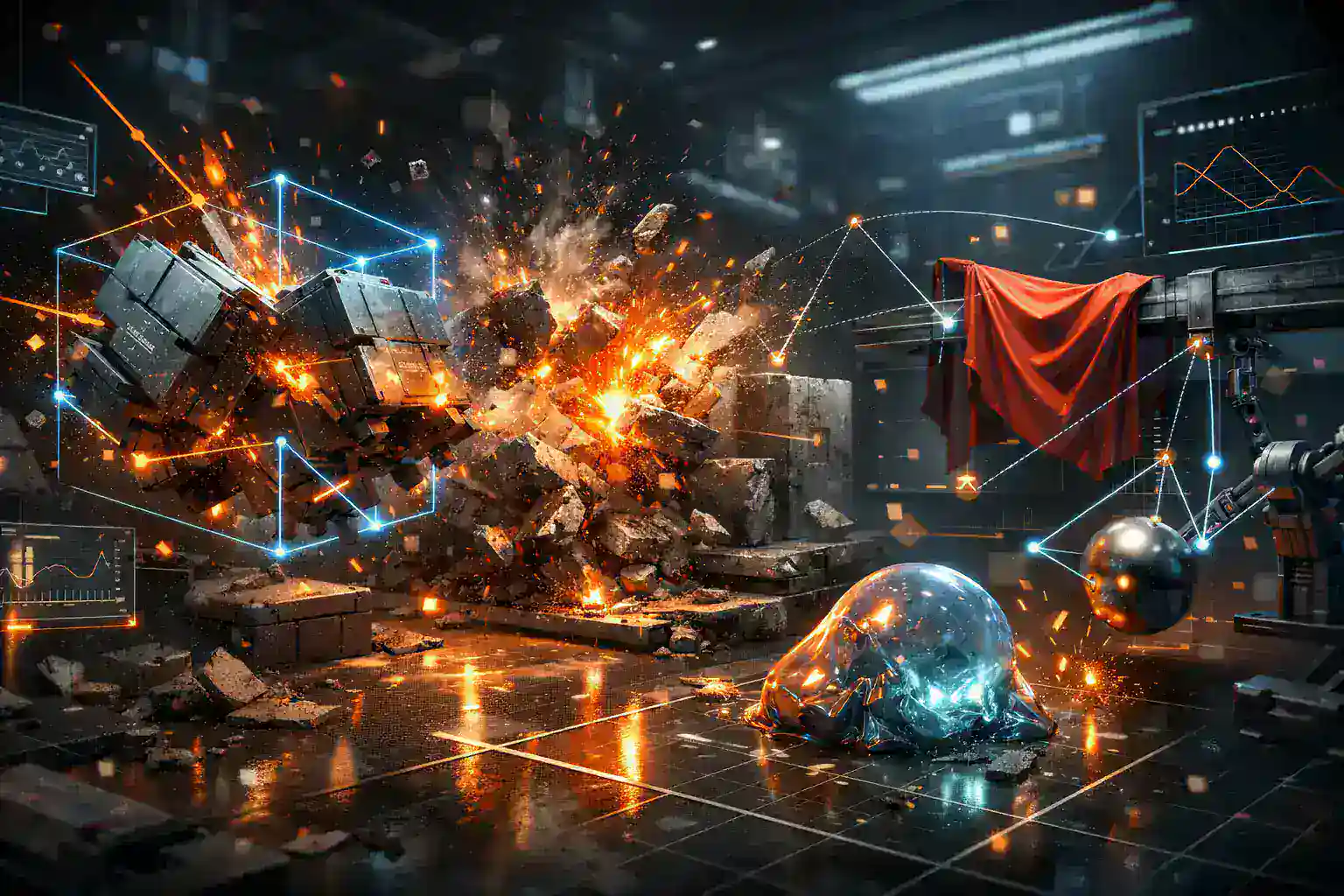
Ultra realistic technical diagram of a game physics engine simulation system showing collision detection, rigid body physics, soft body simulation, and real-time game engine architecture, futuristic UI style, high detail, cinematic lighting, 3D engine visualization
Constraint Systems and Character Stability
In addition to rigid body simulation, a modern Game Physics Engine must handle constraints that keep objects connected in a stable and believable way. Constraints define how two or more objects are allowed to move relative to each other. These rules are essential for character rigs, vehicles, mechanical objects, and interactive environments.
For example, a character model is made of multiple parts connected by joints. The Game Physics Engine uses constraint solvers to ensure that arms, legs, and body segments move naturally without breaking apart. These calculations must be stable even when the character interacts with complex environments or other physical objects.
Vehicle systems also rely heavily on constraints. Suspension movement, wheel rotation, and chassis balance are all controlled by the Game Physics Engine. Without proper constraint solving, vehicles would slide, bounce unrealistically, or lose stability during gameplay.
Ragdoll Simulation and Dynamic Animation Blending
One of the most visible features powered by a Game Physics Engine is ragdoll simulation. When a character loses control, the animation system stops driving the skeleton and physics takes over. Each body part becomes a simulated object connected by constraints, allowing the character to fall naturally based on forces and collisions.
Modern engines blend animation and physics together instead of switching completely between them. The Game Physics Engine works alongside the animation system to keep movement believable while maintaining gameplay control. This hybrid approach is used in most modern action and open-world games.
This process must stay synchronized with rendering and shader systems. When animation, physics, and graphics are not aligned, visual artifacts may appear. Systems such as
Shader Compilation in Games
help ensure that rendering updates correctly when physics changes object positions.
Large World Simulation and Streaming Physics Data
Large environments introduce new challenges for every Game Physics Engine. When a world contains thousands of objects, the engine cannot simulate everything at the same time. Instead, physics calculations are limited to the area near the player while distant objects remain inactive.
This approach requires the physics system to work together with streaming technology. When new areas are loaded, collision shapes, rigid bodies, and constraints must be created instantly. When areas are unloaded, the Game Physics Engine must safely remove those objects without breaking the simulation.
Because of this, physics data often uses the same streaming logic used for assets and geometry. Efficient synchronization between systems allows the Game Physics Engine to maintain performance even in very large open-world environments.
Deterministic Simulation and Network Synchronization
Multiplayer games require a special type of behavior from the Game Physics Engine. In online environments, physics results must stay consistent across different machines. If simulations produce different results, players may see objects in different positions, causing serious gameplay problems.
To avoid this, engines use deterministic simulation rules whenever possible. The Game Physics Engine processes the same inputs in the same order to produce identical results. When full determinism is not possible, servers send correction data to keep all players synchronized.
Networked physics is one of the most difficult parts of engine design. Even small timing differences can cause objects to jitter or snap. Because of this, multiplayer systems are carefully integrated with the Game Physics Engine to maintain stability during gameplay.
GPU Acceleration in Modern Physics Simulation
As game worlds become more complex, CPU-only simulation is no longer enough. Many modern engines allow parts of the Game Physics Engine to run on the GPU. This approach makes it possible to simulate particles, cloth, and destruction effects without slowing down the main game thread.
GPU physics is especially useful for large numbers of small objects. Explosions, debris, and environmental effects can be processed in parallel, allowing the Game Physics Engine to maintain stable frame times. This technique is commonly used in high-end engines and professional simulation frameworks.
AMD provides technical examples of GPU-accelerated physics workloads in their developer documentation:
AMD GPUOpen Developer Resources
These resources show how modern engines distribute simulation tasks between CPU and GPU to keep the Game Physics Engine efficient even under heavy load.
Physics Optimization and Frame Stability
Performance control is one of the most important responsibilities of a Game Physics Engine. Unlike rendering, physics cannot simply skip updates without affecting gameplay. Every frame must produce consistent results while staying within strict timing limits.
To maintain stability, engines use fixed time steps. Instead of running simulation at random intervals, the Game Physics Engine updates at a constant rate. This prevents unpredictable movement and keeps object behavior consistent across different hardware.
When the frame rate drops, the engine may run multiple physics steps in one frame to keep the simulation accurate. This technique ensures that the Game Physics Engine remains stable even when performance changes during gameplay.
Physics Debugging Tools Inside Modern Engines
Developers rely on debugging tools to monitor the behavior of the Game Physics Engine. These tools display collision shapes, force vectors, and constraint connections in real time. By visualizing the simulation, developers can detect instability, incorrect collisions, or performance problems.
Professional engines include built-in physics profilers that show how much time each simulation step consumes. Optimizing the Game Physics Engine often involves reducing collision complexity, simplifying shapes, or limiting the number of active objects.
These tools are essential for maintaining performance in large projects where physics interacts with animation, rendering, AI, and memory systems at the same time.
Image Placement
Place image after this section
Image Prompt:
cinematic realistic game engine physics simulation showing ragdoll system, constraints, collision shapes, GPU physics particles, modern game engine debug view, high detail, realistic lighting, 3D engine visualization
Conclusion
The Game Physics Engine is one of the most important components inside modern game technology. It controls how objects move, interact, collide, and react to forces while keeping gameplay stable and believable. From rigid body simulation to GPU-accelerated effects, every part of the system must operate in perfect synchronization with rendering, animation, and streaming technologies.
As modern games continue to grow in scale and complexity, the role of the Game Physics Engine becomes even more critical. Advanced simulation techniques allow developers to create dynamic environments, responsive gameplay, and realistic interactions without sacrificing performance.
Understanding the architecture of a Game Physics Engine reveals how much work happens behind the scenes in every modern game. While players see smooth movement and realistic reactions, the engine is constantly solving thousands of physical calculations every second to keep the world stable.