Inside the Professional Esports Ecosystem: Infrastructure, Organizations, and the Competitive Gaming Industry
Over the last decade, competitive gaming has evolved from small community tournaments into a global entertainment industry supported by millions of viewers and massive investments. What once started as informal competitions between skilled players has now developed into a highly structured environment involving professional organizations, training facilities, analysts, marketing teams, and large-scale tournament infrastructure. Understanding the professional esports ecosystem requires looking beyond the players themselves and examining the complex network of systems that support competitive gaming at the highest level.
Today, esports organizations operate similarly to modern sports clubs and media companies. They manage teams across multiple games, build international brands, develop training programs, and collaborate with technology companies, sponsors, and tournament organizers. This interconnected structure forms the foundation of the modern professional esports ecosystem, where performance, technology, and entertainment intersect to create a rapidly growing global industry.
The Expansion of Competitive Gaming as a Structured Industry
The growth of esports has been driven by several factors, including improved internet infrastructure, global streaming platforms, and the increasing popularity of competitive multiplayer games. As viewership numbers increased across platforms like Twitch and YouTube Gaming, competitive gaming transformed into a professional field with its own infrastructure and economic structure. These developments helped shape the modern professional esports ecosystem, where tournaments can attract millions of viewers worldwide.
Large publishers such as Riot Games and Valve began organizing official leagues and international championships, establishing standardized formats for competition. Tournament circuits, seasonal leagues, and global championships introduced consistency to the industry, encouraging organizations to invest in professional teams and long-term talent development. The result was a more stable and recognizable professional esports ecosystem where teams could build reputations and audiences over time.
The Structure of Modern Esports Organizations
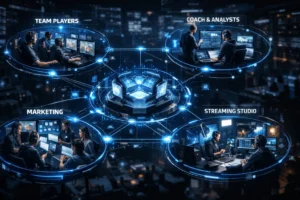
Professional esports organizations are far more complex than many casual viewers might assume. Behind every competitive roster stands a team of specialists responsible for training, strategy, marketing, logistics, and performance management. These roles form the operational backbone of the professional esports ecosystem, allowing teams to compete consistently at the highest level.
Most esports organizations include departments dedicated to player development, analytics, content production, and brand management. Analysts review gameplay data to identify patterns and strategies, while coaches work with players to refine decision-making and communication. Content teams produce videos, interviews, and social media campaigns that connect fans with the organization’s identity.
This multi-layered structure reflects how esports teams have evolved into fully developed companies. Their operations resemble those of professional sports franchises, where success depends not only on individual skill but also on the efficiency of the broader professional esports ecosystem surrounding the players.
Training Facilities and Competitive Preparation
One of the most visible components of the modern esports industry is the rise of professional training environments. Many organizations operate dedicated gaming houses or performance centers designed to support daily practice, strategy development, and team coordination. These facilities have become essential components of the professional esports ecosystem, enabling teams to prepare for high-level tournaments in controlled and collaborative environments.
Training facilities often include advanced gaming equipment, high-speed networking infrastructure, recording systems for gameplay analysis, and comfortable living spaces for players. Some organizations have even introduced performance labs that monitor player reaction time, cognitive focus, and physical well-being. By combining technical resources with professional coaching, these environments help players maintain consistent performance throughout long competitive seasons.
The emphasis on preparation highlights how esports has matured into a professional discipline. Players are no longer simply practicing individually; they are part of a structured system that encourages collaboration, strategy development, and performance improvement within the broader professional esports ecosystem.
The Role of Data and Strategic Analysis
Data analysis has become an essential component of competitive gaming. Teams now review thousands of gameplay moments to understand strategies, predict opponent behavior, and optimize team coordination. Analysts study movement patterns, decision-making speed, and tactical positioning to gain insights that can influence match outcomes.
This analytical approach reflects the increasing sophistication of the professional esports ecosystem. Just as traditional sports rely on performance statistics and video review, esports teams use advanced tools to analyze gameplay frame by frame. These insights allow coaches and players to refine strategies and adapt quickly to changing competitive environments.
Many teams also rely on replay databases and strategic modeling tools to evaluate opponents before tournaments. This preparation transforms esports competition into a complex strategic battle where information and preparation can provide a significant advantage.
Technology Infrastructure Supporting Competitive Play
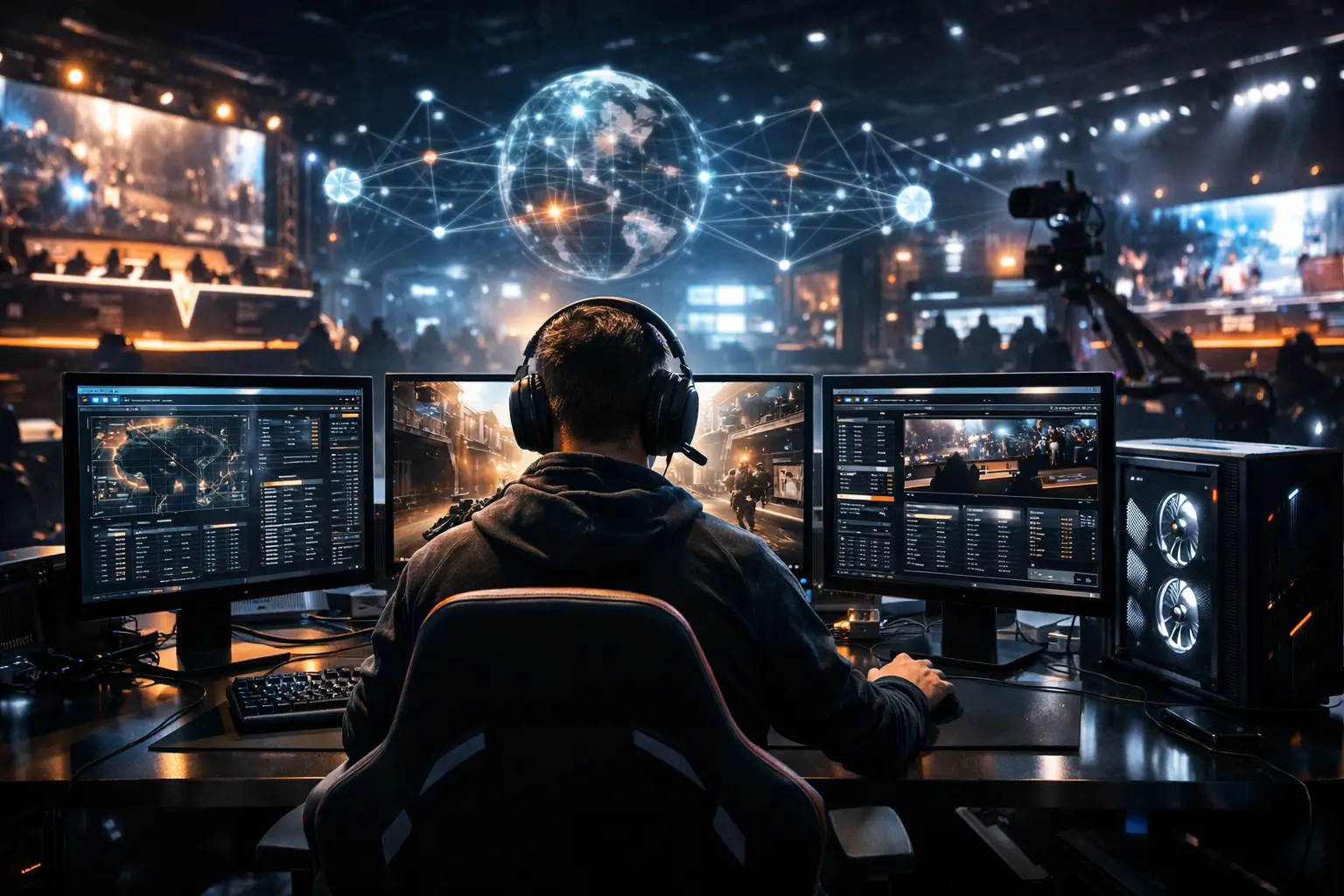
Behind every esports tournament lies a powerful technological infrastructure that ensures stable gameplay and seamless broadcasting. Competitive matches require high-performance gaming hardware, reliable networking systems, and broadcast production environments capable of delivering smooth streams to global audiences. These systems form a critical layer of the professional esports ecosystem.
Modern esports events often rely on custom server configurations and specialized network routing to maintain low latency and competitive fairness. Tournament organizers coordinate closely with game developers to ensure that patches, balance updates, and server performance do not disrupt ongoing competitions.
In addition to technical reliability, broadcast production plays a major role in esports presentation. Professional commentators, analysts, and production teams transform competitive matches into engaging entertainment experiences. Camera systems, replay tools, and real-time statistics help viewers understand complex gameplay moments and follow the strategic narrative of each match.
Global Connectivity and Audience Growth
The rise of streaming technology has allowed esports tournaments to reach audiences across every continent. Unlike traditional sports that rely heavily on physical stadiums, esports competitions can be viewed simultaneously by millions of fans online. This global accessibility has accelerated the expansion of the professional esports ecosystem, connecting players, teams, and fans regardless of geographic location.
International tournaments often feature teams from multiple regions, creating diverse competition and encouraging global fan communities. As these audiences grow, esports organizations gain opportunities to expand their brands through digital content, merchandise, and partnerships with technology companies.
Several industry research platforms track the growth of esports audiences and market size. Reports published by trusted research firms such as Newzoo provide detailed analysis of esports viewership trends, investment activity, and global market development. These insights help organizations and investors better understand how the professional esports ecosystem continues to evolve as competitive gaming expands worldwide.
Similarly, community knowledge platforms like Liquipedia document tournament histories, team rosters, and competitive statistics, providing valuable resources for fans and analysts who want to follow the competitive landscape in greater depth.
As infrastructure, organizations, and audiences continue to grow, the foundations of the professional esports ecosystem become increasingly sophisticated. Competitive gaming now operates at the intersection of technology, entertainment, and professional sports culture, setting the stage for further innovation and expansion across the global gaming industry.
Economic Foundations of the Esports Industry

While competitive gameplay sits at the center of esports, the long-term sustainability of the industry depends heavily on its financial structure. The modern professional esports ecosystem operates through a diverse set of revenue streams that support teams, tournament organizers, and media platforms. Understanding these financial foundations reveals how competitive gaming has evolved into a serious global industry rather than a niche hobby.
One of the most significant financial drivers in the esports sector is sponsorship. Technology companies, gaming hardware manufacturers, and even non-endemic brands partner with esports organizations to reach a global audience of digitally engaged fans. These partnerships often involve branding across team jerseys, digital broadcasts, social media campaigns, and live events. Sponsorships therefore form a central pillar of the professional esports ecosystem, allowing organizations to invest in infrastructure, training facilities, and long-term competitive development.
In addition to sponsorship deals, media rights have become increasingly valuable. Tournament organizers frequently collaborate with streaming platforms to distribute competitive matches to global audiences. Exclusive broadcasting agreements, advertising revenue, and platform partnerships contribute significantly to the financial stability of the professional esports ecosystem. As viewership numbers continue to grow, these agreements become more valuable, attracting additional investors to the industry.
Merchandise and Brand Identity
Successful esports organizations invest heavily in brand development. Fans often connect emotionally with teams and players, and this connection allows organizations to expand their influence beyond competitive matches. Merchandise such as jerseys, hoodies, and gaming accessories has become an important revenue stream within the professional esports ecosystem.
Many teams now collaborate with professional designers and apparel companies to create limited-edition collections that appeal to both gaming fans and lifestyle audiences. These products are promoted through social media campaigns, influencer partnerships, and tournament broadcasts. By combining competitive success with strong visual branding, organizations strengthen their presence within the broader professional esports ecosystem.
Brand development also extends into digital content production. Teams regularly produce behind-the-scenes videos, documentaries, and player interviews that provide insight into training routines and team culture. This content allows fans to develop a deeper connection with organizations and contributes to the overall media presence of the professional esports ecosystem.
Player Development and Talent Discovery
Another essential component of competitive gaming is talent development. Professional teams are constantly searching for skilled players capable of competing at the highest level. Many organizations now operate scouting systems, academy teams, and developmental leagues designed to identify promising talent early in their careers.
These talent pipelines mirror the systems used in traditional sports. Academy rosters allow younger players to develop competitive experience before joining the main professional lineup. This process helps maintain a steady flow of skilled competitors entering the professional esports ecosystem, ensuring that tournaments remain highly competitive and exciting for audiences.
Coaching staff and performance specialists play a key role in player development. They analyze gameplay data, develop training programs, and guide players through strategic preparation for major tournaments. The integration of structured coaching demonstrates how the professional esports ecosystem continues to mature into a professional environment built around long-term growth and competitive excellence.
The Influence of Media and Content Creation
Digital media plays a powerful role in shaping how esports organizations connect with global audiences. Content creation has become a strategic tool for expanding fan communities and strengthening team identities. From live streams and documentaries to social media highlights and analysis videos, content production supports the visibility of the professional esports ecosystem.
Streaming platforms provide direct communication between players and fans. Professional players often broadcast their practice sessions, discuss strategy, and interact with viewers in real time. This interaction creates a level of accessibility rarely seen in traditional sports and reinforces the community-driven nature of the professional esports ecosystem.
Content creators and esports journalists also contribute to industry visibility by analyzing tournaments, interviewing players, and reporting on organizational developments. Industry-focused platforms such as Esports Insider regularly publish reports about investments, partnerships, and structural changes within competitive gaming. These publications help audiences understand the economic and organizational trends shaping the professional esports ecosystem.
Technology and Hardware Partnerships
Competitive gaming relies heavily on advanced technology, and this dependence has encouraged strong partnerships between esports organizations and hardware manufacturers. Companies that produce gaming peripherals, graphics cards, and high-performance monitors frequently collaborate with teams to showcase their products in professional environments.
These partnerships benefit both sides of the industry. Teams gain access to cutting-edge equipment, while technology companies receive global exposure through tournament broadcasts and player endorsements. This mutually beneficial relationship strengthens the technological foundations of the professional esports ecosystem and drives innovation within gaming hardware development.
Professional tournaments also require highly specialized equipment to ensure competitive fairness. Tournament PCs are often standardized to maintain consistent performance, and networking systems are optimized to minimize latency during matches. These technical requirements highlight how the professional esports ecosystem relies on reliable infrastructure and hardware performance to maintain competitive integrity.
Global Events and International Competition
Large international tournaments represent some of the most visible moments in competitive gaming. Global championships bring together the strongest teams from multiple regions, creating high-stakes competitions that attract massive online audiences. These events play a crucial role in strengthening the visibility and legitimacy of the professional esports ecosystem.
International tournaments often take place in large arenas or convention centers equipped with professional broadcast studios, stage lighting systems, and live audiences. The atmosphere created during these events mirrors the excitement of traditional sports championships while maintaining the digital accessibility that defines the professional esports ecosystem.
Global competition also encourages strategic diversity. Teams from different regions frequently develop unique playstyles influenced by local gaming cultures and training philosophies. When these teams meet on international stages, the resulting matches showcase the depth and complexity of modern esports competition.
The Long-Term Stability of Competitive Gaming
The continued growth of competitive gaming depends on the stability of its infrastructure and the sustainability of its business models. Investors, developers, and tournament organizers all contribute to maintaining a healthy environment for teams and players. When these elements work together effectively, the professional esports ecosystem becomes more resilient and capable of supporting long-term growth.
Industry researchers, analysts, and media outlets continue to monitor the development of esports markets worldwide. Their reports highlight how technological innovation, digital entertainment trends, and global connectivity contribute to the ongoing expansion of the professional esports ecosystem. As competitive gaming continues to mature, its influence within the broader gaming industry becomes increasingly significant.
Conclusion
Competitive gaming has evolved into a sophisticated global industry supported by a complex network of organizations, technology, and media platforms. The modern professional esports ecosystem includes professional teams, training facilities, broadcasting networks, sponsorship partnerships, and millions of passionate fans who follow tournaments across the world.
What began as small community competitions has grown into a structured environment where strategic preparation, brand development, and technological innovation all contribute to competitive success. As new audiences continue to discover esports and investment in the industry expands, the professional esports ecosystem will likely continue evolving into one of the most influential sectors within digital entertainment.
For gaming enthusiasts and industry observers alike, understanding this ecosystem provides valuable insight into how competitive gaming operates behind the scenes. From player development and organizational strategy to global tournaments and technological infrastructure, every element contributes to the continued expansion of the professional esports ecosystem.