Adaptive Game AI Systems: Enhancing Real-Time Gameplay with Intelligent Behavior
In the modern gaming landscape, Adaptive Game AI Systems have emerged as a pivotal technology that transforms how players experience games. Unlike traditional AI, which relies on static scripts and pre-defined behaviors, adaptive AI can dynamically respond to player actions, learn from gameplay patterns, and alter the environment or non-player character (NPC) behavior in real-time. This innovation not only enhances immersion but also ensures that each gaming session offers a unique challenge tailored to individual players.
At the core of these systems is a combination of machine learning algorithms, behavioral analysis, and sophisticated decision-making frameworks. Game developers integrate these AI systems within the engine’s architecture to continuously monitor player performance, detect patterns, and adjust difficulty or strategies accordingly. For example, if a player consistently excels in combat scenarios, the AI may deploy more complex enemy tactics or introduce environmental hazards that require strategic thinking.
One of the key benefits of Adaptive Game AI Systems is their ability to maintain engagement over extended play periods. Static AI often leads to predictable gameplay, which can diminish the player’s sense of challenge. Adaptive AI, on the other hand, creates a feedback loop where the game evolves alongside the player. This ensures that whether a gamer is a beginner or a seasoned expert, the gameplay remains compelling and rewarding.
Integrating adaptive AI into a game engine requires careful consideration of performance. High-level AI computations can be resource-intensive, impacting frame rates and responsiveness. Here, technologies such as Game Engine Thread Scheduling Systems become critical. By effectively distributing AI calculations across multiple CPU threads and cores, developers can maintain real-time responsiveness while supporting complex adaptive behaviors.
Moreover, adaptive AI does not operate in isolation. It often interacts with the game’s physics engine to create realistic, emergent gameplay scenarios. For instance, NPCs in a dynamic environment may use cover intelligently, respond to environmental changes, or even manipulate objects to hinder the player. These behaviors are heavily influenced by the physics system, making links to technologies like Game Physics Engine Architecture
particularly relevant for developers aiming to maximize immersion.
Beyond traditional games, adaptive AI is becoming increasingly important in massive multiplayer online (MMO) environments. In these settings, player behavior can vary dramatically, and AI must account for a wide array of strategies. Adaptive systems can analyze aggregated player data to predict trends, balance encounters, and ensure that no single playstyle dominates the experience. This form of AI-driven game balancing is crucial for sustaining healthy player communities over time.
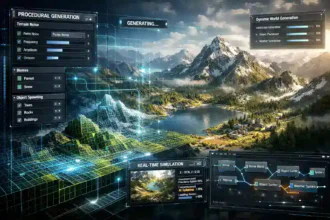
Another aspect worth noting is procedural content generation powered by AI. While procedural generation has traditionally been used to create infinite worlds or dynamic levels, combining it with adaptive AI allows the environment itself to respond intelligently to players. This creates a synergistic effect where both the world and the characters evolve in harmony, delivering an unprecedented level of replayability and challenge.
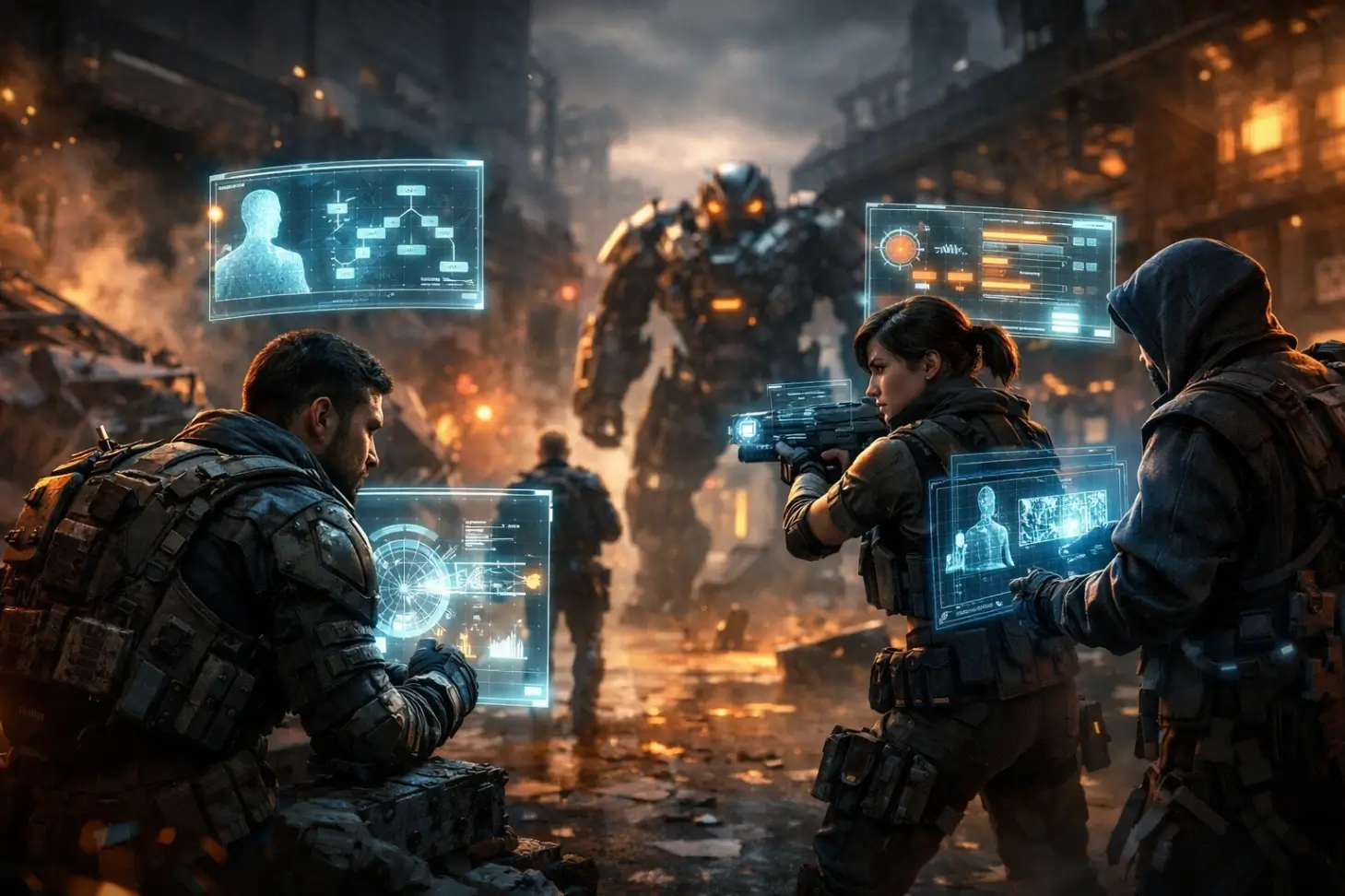
Visualizing adaptive AI in action often involves complex simulations. Game developers use real-time monitoring dashboards to track AI decisions, player interactions, and environmental adaptations. This data is then used to refine algorithms, optimize behavior patterns, and prevent scenarios that could break immersion or frustrate players. External studies and publications on AI in games, such as research by the Gamasutra or AIIDE Conference, provide insights into best practices and emerging trends in this field.
In terms of gameplay genres, adaptive AI has found applications across a broad spectrum. In first-person shooters, enemies can flank intelligently or change tactics based on the player’s preferred approach. In strategy games, AI opponents can alter economic or military priorities in response to the player’s decisions. Even in narrative-driven titles, adaptive AI can influence story branching, character interactions, or event outcomes, creating a personalized storytelling experience.
Implementing adaptive AI also requires balancing complexity with performance optimization. Developers often employ hybrid AI models that combine rule-based systems for predictable scenarios with machine learning modules for dynamic adaptation. This approach allows games to deliver sophisticated, responsive behavior without overloading the engine, ensuring smooth gameplay even in graphically intensive or resource-heavy environments.
To summarize, Adaptive Game AI Systems represent a transformative shift in gaming technology. By learning from player behavior, adjusting strategies dynamically, and integrating seamlessly with physics and engine subsystems, adaptive AI creates experiences that are both challenging and immersive. This innovation continues to redefine what players can expect from modern video games, setting a new standard for interactivity and engagement.
Next, in the second part, we will explore the technical architecture, implementation strategies, and real-world case studies of adaptive AI systems in gaming, delving deeper into their impact on performance and player engagement.
Technical Architecture and Implementation of Adaptive Game AI Systems
The development of Adaptive Game AI Systems requires a careful orchestration of multiple subsystems within a game engine. At the core lies a decision-making module, typically powered by machine learning algorithms or behavior trees, which continuously analyzes player input, environmental changes, and NPC interactions. These systems operate on real-time data streams, enabling AI-controlled entities to respond intelligently and dynamically without pre-scripted behavior constraints.
To handle complex adaptive behaviors, developers integrate these systems with the engine’s task management architecture. Advanced scheduling mechanisms, similar to those found in Game Engine Thread Scheduling Systems, ensure that AI computations do not interfere with rendering pipelines or physics simulations. By assigning priority threads for AI decision-making and asynchronous updates, adaptive AI maintains responsiveness even during resource-intensive scenarios.
Another critical aspect is the interaction between Adaptive Game AI Systems and the game’s physics engine. Realistic behavior often relies on accurate simulation of collisions, environmental responses, and object manipulation. For instance, in a stealth game, AI-controlled enemies can use cover intelligently, respond to sound cues, or navigate complex terrains—all made possible through tight integration with physics subsystems. Studies on Game Physics Engine Architecture provide a blueprint for developers seeking to optimize AI-physics synergy.
One notable implementation strategy involves hybrid AI models that combine deterministic and adaptive components. Deterministic models handle predictable scenarios, such as scripted boss fights or tutorial sequences, while adaptive modules analyze player behavior patterns to alter combat strategies, enemy placement, or environmental challenges. This hybrid approach allows Adaptive Game AI Systems to deliver a seamless experience that feels both responsive and balanced, enhancing replayability and long-term engagement.
Real-world examples of adaptive AI are increasingly prevalent in modern titles. In open-world RPGs, NPCs adapt to the player’s progression, adjusting difficulty, trading behavior, or quest availability. Multiplayer competitive games use adaptive AI to simulate human-like opponents or balance matchmaking when player populations fluctuate. Each of these applications relies on sophisticated data collection, pattern recognition, and predictive algorithms to maintain a compelling and dynamic experience.
Furthermore, Adaptive Game AI Systems are often complemented by procedural content generation (PCG) to enhance variety. When AI behavior and level design are interlinked, the game world can respond intelligently to player choices, ensuring no two playthroughs are identical. Procedural dungeons, dynamic event triggers, and environment-based challenges all benefit from this integration, creating emergent gameplay scenarios that feel organic and engaging.
Monitoring and refining adaptive AI is another vital component of the development cycle. Developers employ real-time analytics dashboards to observe AI behavior, detect anomalies, and adjust algorithms to prevent frustration or predictability. Data-driven approaches allow continuous improvement of Adaptive Game AI Systems, ensuring that gameplay remains challenging, fair, and enjoyable for a diverse range of players.
Optimization techniques are essential when implementing adaptive AI in large-scale games. Developers must balance computational load against responsiveness, often using predictive models to pre-calculate potential outcomes, caching decisions, or limiting adaptive calculations to key encounters. This ensures that Adaptive Game AI Systems maintain high performance without compromising player experience, even in graphically or mechanically complex environments.
Security and anti-cheat considerations are also critical, particularly in multiplayer settings. Adaptive AI can be exploited if players manipulate patterns to predict AI behavior. Developers implement safeguards that randomize or obfuscate AI decision-making processes, ensuring integrity and fairness in competitive environments. External resources like GDC Vault offer detailed case studies on these implementation strategies, highlighting best practices for adaptive AI in professional game development.
Emerging trends suggest that Adaptive Game AI Systems will become increasingly personalized. Machine learning models may profile individual players to adjust narrative, difficulty, and engagement dynamically, creating an unprecedented level of tailored experience. This personalization extends beyond traditional gameplay, influencing audio cues, visual feedback, and even haptic responses in immersive VR and AR environments.
In summary, Adaptive Game AI Systems represent a convergence of artificial intelligence, procedural generation, physics simulation, and real-time computation. By leveraging these technologies, developers can craft experiences that are responsive, intelligent, and highly engaging. The combination of predictive analytics, hybrid AI models, and tight integration with engine subsystems ensures that games remain challenging, immersive, and rewarding, regardless of the player’s skill level or playstyle.
As the gaming industry continues to innovate, adaptive AI is poised to become a standard in modern game development, driving next-generation experiences that redefine how players interact with virtual worlds. By implementing these systems thoughtfully, developers can create games that not only entertain but also evolve with the player, offering endless replayability and sustained engagement.
Overall, the implementation of Adaptive Game AI Systems is not just a technical achievement but a paradigm shift in gaming design, emphasizing interactivity, personalization, and intelligent responsiveness at unprecedented levels.