
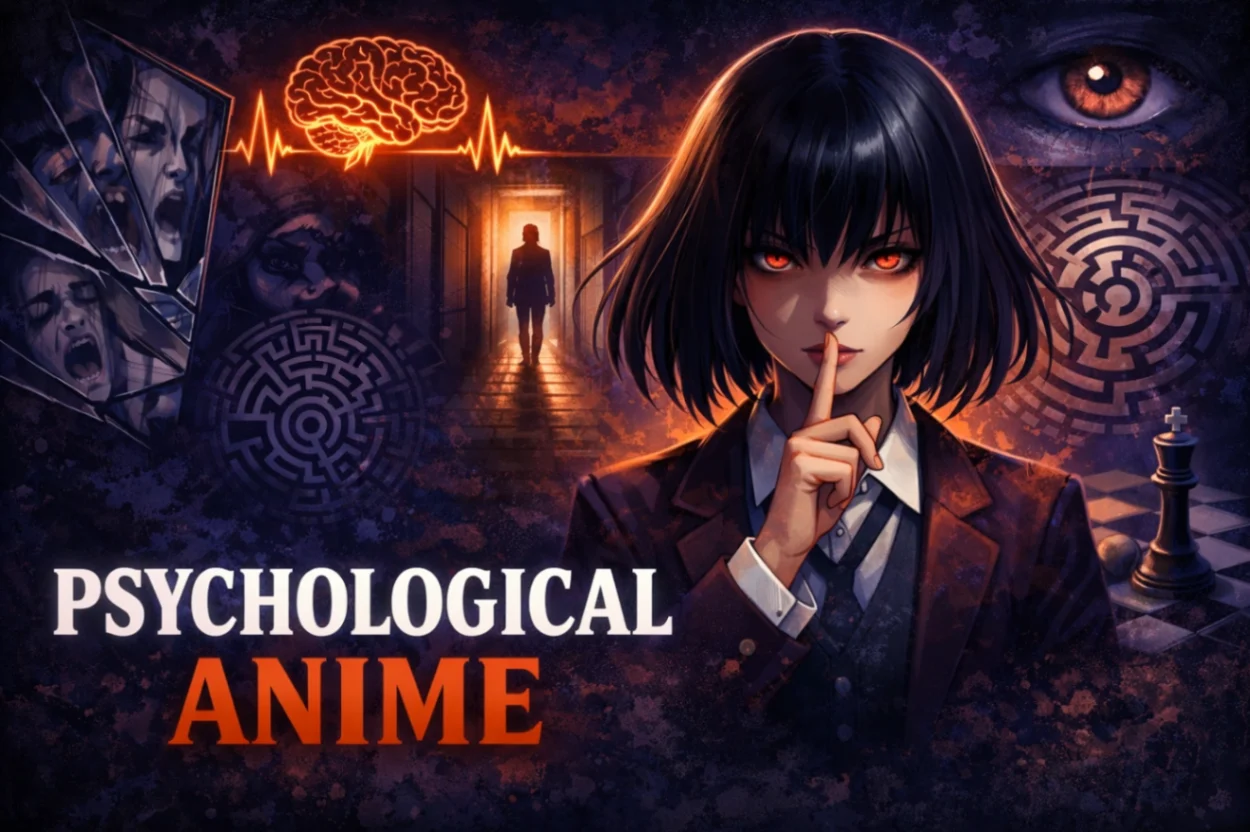
Psychological Anime: Captivating Stories That Challenge Your Mind
Psychological anime is not the kind of genre you casually watch in the background. It is immersive, thought-provoking, and often emotionally intense. Instead of relying on constant action or spectacle, psychological anime pulls viewers into the inner worlds of its characters, exploring fears, doubts, motivations, and complex mental struggles.
For many anime fans, discovering psychological storytelling feels like stepping into a completely different experience. The tension is quieter, the conflicts feel deeper, and the impact tends to linger long after the episode ends. But what exactly makes psychological anime so captivating?
What Is Psychological Anime, Really?
Psychological anime focuses on the internal rather than the external. While many genres emphasize battles, adventures, or dramatic events, psychological narratives revolve around thoughts, emotions, and perception. The drama often unfolds inside the characters’ minds, where beliefs, fears, and moral dilemmas collide.
This genre frequently explores themes such as identity, reality, morality, memory, and emotional tension. The storytelling is designed not just to entertain, but to engage the viewer intellectually and emotionally. Instead of presenting clear answers, psychological anime often raises intriguing questions.
If you are interested in how atmosphere shapes emotional experiences, you may also enjoy Anime Atmosphere: The Hidden Force Behind Deep Emotional and Unforgettable Experiences, which explores how mood and tone influence storytelling.
Why Psychological Anime Feels So Different
One of the defining characteristics of psychological anime is how it handles tension. Rather than explosive confrontations, tension builds gradually through uncertainty, internal conflict, and subtle character development. A simple conversation, a pause, or a shift in expression can carry enormous weight.
This approach creates a unique viewing experience. You are not merely observing events; you are interpreting motives, analyzing behavior, and constantly reassessing your understanding of the narrative. The genre invites active participation from the audience.
Psychological storytelling also thrives on ambiguity. Characters are rarely presented as purely heroic or villainous. Instead, they exist in morally complex spaces that reflect realistic human struggles — a concept closely related to Anime Moral Ambiguity: Powerful Stories Beyond Heroes and Villains.
The Role of the Human Mind in Storytelling
At the heart of psychological anime lies a fascination with the human mind. Thoughts, perceptions, and emotions become central narrative tools. This focus allows stories to explore concepts that traditional action-driven narratives often overlook.
Questions of identity, for example, frequently appear in psychological works. Characters may struggle with self-perception, conflicting beliefs, or distorted realities. These themes resonate strongly because they mirror genuine psychological concerns studied in fields such as psychology.
By weaving psychological ideas into fictional narratives, anime can examine complex emotional states with remarkable creativity.
Internal Conflict: The True Source of Tension
Unlike genres built on physical confrontation, psychological anime often derives tension from internal conflict. Characters wrestle with guilt, fear, obsession, uncertainty, or ethical dilemmas. The stakes feel high because decisions carry psychological consequences rather than purely physical risks.
This internalized tension creates a deeply personal experience for viewers. Watching a character confront their own doubts or moral contradictions can feel far more impactful than witnessing conventional battles.
Perspective plays a crucial role here. How events are framed, what information is revealed, and how characters interpret their situations all shape the viewer’s understanding — ideas explored further in Anime Perspective: How Storytelling and Viewpoint Enhance Emotion and Meaning.
Why Psychological Anime Stays With You
Psychological anime has an unusual ability to linger in memory. Instead of delivering straightforward entertainment, it stimulates curiosity and reflection. Viewers often find themselves thinking about character motivations, hidden meanings, or unresolved questions long after finishing a series.
This lasting impact stems from engagement. The genre encourages interpretation rather than passive consumption. Every detail, from dialogue to visual cues, can contribute to deeper meaning.
Visual symbolism, for instance, frequently enhances psychological narratives. Subtle imagery and metaphorical visuals communicate emotional states or thematic ideas, a topic discussed in Anime Visual Symbolism: How Imagery and Subtle Details Tell Powerful Stories.
Reality, Illusion, and Perception
A recurring theme in psychological anime is the fragile boundary between reality and illusion. Characters — and sometimes viewers — may question what is genuine, what is manipulated, and what is imagined. This uncertainty becomes a powerful storytelling device.
These narratives reflect philosophical and psychological inquiries into perception, similar to discussions found in resources like Perception – Wikipedia.
By challenging the reliability of perspective, psychological anime creates suspense that feels intellectual rather than purely dramatic.
Character Complexity and Emotional Depth
Psychological anime depends heavily on character complexity. Personalities are layered, motivations evolve, and emotional states shift in ways that feel organic. Rather than simplistic archetypes, characters resemble real individuals navigating internal struggles.
This depth fosters stronger viewer attachment. Audiences recognize familiar emotions — insecurity, doubt, ambition, anxiety — even within exaggerated fictional contexts. The result is a more intimate connection with the narrative.
Character presence, including subtle behavioral nuances, significantly shapes storytelling effectiveness, a concept explored in Anime Character Presence: The Silent Power of Unforgettable Characters.
Pacing and Narrative Structure
Psychological anime often employs deliberate pacing. Tension builds gradually, allowing space for introspection, atmosphere, and thematic development. While some viewers initially interpret this as slow, the pacing is a deliberate creative choice.
Moments of silence, restrained dialogue, and visual cues gain importance. Each scene contributes to mood and psychological tension. When climactic moments arrive, their impact feels earned and emotionally satisfying.
Storytelling craftsmanship becomes central, aligning with ideas discussed in Anime Storytelling Mastery: How Anime Crafts Deep Emotional and Timeless Stories.
Misconceptions About Psychological Anime
Psychological anime is sometimes misunderstood as overly complex or intentionally confusing. In reality, many series are simply more nuanced than conventional narratives. Ambiguity is not necessarily a barrier — it is often an invitation to interpret.
Another misconception is that psychological storytelling must be dark or depressing. While the genre frequently explores serious themes, it can also contain moments of beauty, reflection, and emotional resonance.
Why the Genre Continues to Grow
Modern audiences increasingly seek narratives that offer depth and intellectual engagement. Psychological anime fulfills this demand by presenting stories that respect viewer intelligence and encourage reflection.
Animation provides creative freedom for representing mental states through symbolism, abstract visuals, and unconventional narrative techniques. This flexibility allows psychological anime to explore ideas that might be difficult to portray in other mediums.
The Viewer’s Journey
Watching psychological anime is rarely passive. Viewers analyze details, question motives, and engage with thematic implications. Discussions, interpretations, and debates often become part of the experience.
This active engagement transforms the genre into something more than entertainment. It becomes a mental and emotional journey.
Final Thoughts
Psychological anime stands as one of the most intellectually engaging forms of animated storytelling. By exploring thoughts, perceptions, and emotional complexity, it offers experiences that challenge, captivate, and endure.
These stories do not merely unfold on screen — they unfold within the viewer’s mind. That is the unique power of psychological anime.