
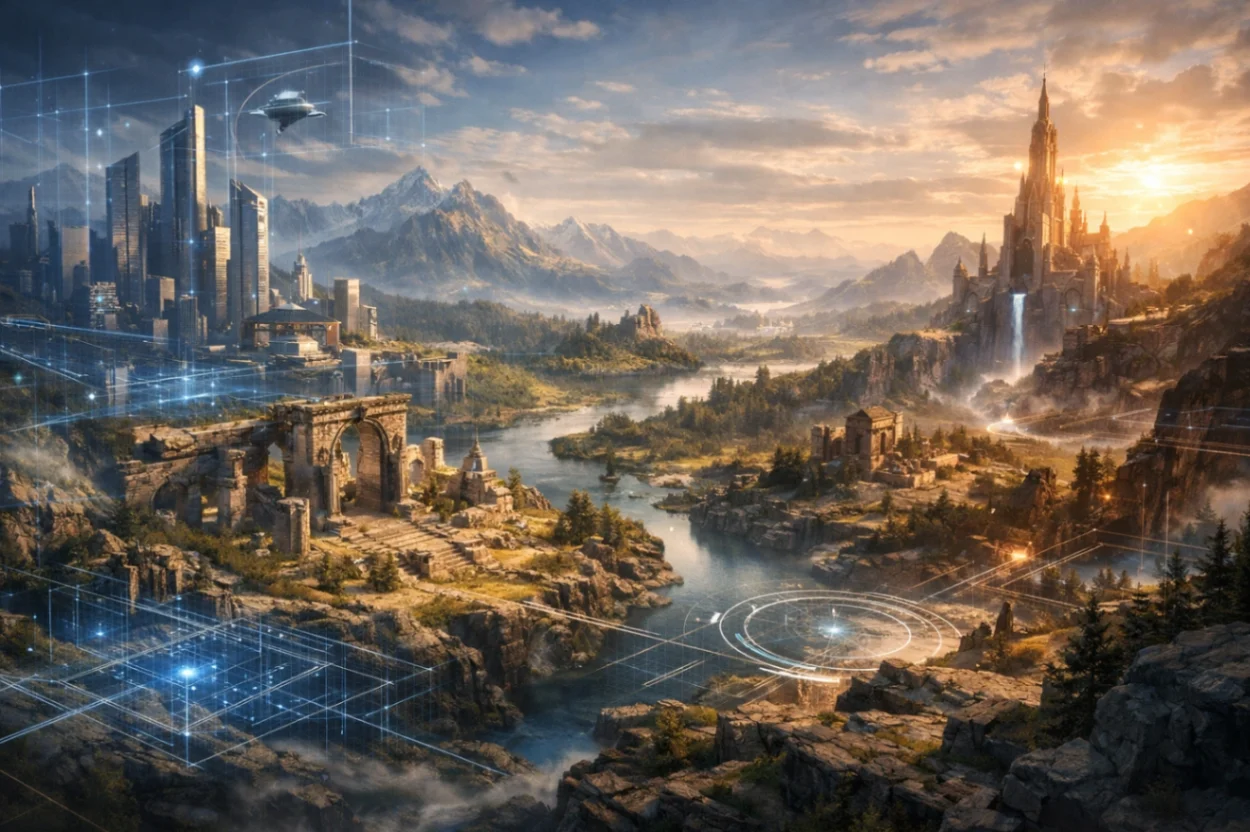
Game World Design: Inside the Digital Spaces That Shape Modern Gaming
In modern video games, players rarely remember mechanics alone. What stays in memory is the place itself — the city they explored, the ruined land they crossed, or the world that felt alive even when no mission was active. This emotional connection is not accidental. It is the result of thoughtful game world design, a discipline that transforms digital spaces into believable, immersive environments.
Unlike graphics or storytelling alone, game world design focuses on how players move through space, interact with environments, and emotionally respond to virtual locations. A well-designed game world encourages curiosity, supports player freedom, and quietly guides behavior without visible restrictions. This is why many of the most successful games are remembered not just as products, but as places.
The Meaning of Game World Design in Modern Games
At its core, game world design refers to the structure, layout, and logic of a game’s environment. It defines how areas connect, how space communicates purpose, and how the world reacts to player presence. A strong game world feels consistent and intentional, even when it is large, complex, or abstract.
Game worlds are more than visual backgrounds. They function as interactive systems where architecture, terrain, sound, and movement work together. When players intuitively understand where they can go and what they can do, the world becomes readable without tutorials. This clarity is one of the most valuable outcomes of effective game world design.
Digital Spaces as Silent Storytellers
Many games communicate narrative through space rather than dialogue. Abandoned buildings, damaged landscapes, and environmental details can reveal history without a single line of text. This technique allows game world design to support storytelling naturally, giving players the freedom to interpret the world on their own terms.
This approach connects closely with narrative-focused experiences. Games that emphasize environmental storytelling often appear in discussions about immersive narratives. In fact, strong world-building frequently complements the ideas explored in
story-driven games, where space and story reinforce each other instead of competing for attention.
World Scale and Player Perception
Size alone does not define quality. Some of the most engaging games use relatively small maps that feel rich and alive. Effective game world design focuses on perceived scale rather than physical distance. Clever use of landmarks, verticality, and visual depth can make compact environments feel expansive.
Players measure space emotionally, not mathematically. A narrow path filled with meaningful interactions can feel longer than a wide empty field. Designers use this principle to control pacing, ensuring that exploration remains engaging without overwhelming the player.
Environmental Flow and Natural Navigation
One of the hidden strengths of good game world design is navigation that feels effortless. Players should rarely feel lost unless confusion is intentionally part of the experience. Subtle visual cues — such as lighting, color contrast, or terrain shape — guide movement without explicit instructions.
This concept, often called environmental flow, allows the world itself to teach players how to move through it. Roads curve toward objectives, open spaces invite exploration, and obstacles signal danger. When done correctly, players feel intelligent rather than directed.
Interactive Environments and Player Agency
A believable game world reacts to the player. Doors open, objects move, and environments respond to actions. These interactions reinforce the idea that the world exists beyond scripted events. Game world design thrives when player choices visibly affect space, even in small ways.
Agency strengthens immersion. When players feel that their presence matters, they invest emotionally in the world. This connection often overlaps with engagement strategies discussed in
player engagement in games, where interaction deepens long-term interest.
Consistency and Internal Logic
Every strong world follows rules. Whether realistic or fantastical, consistency is essential. Game world design ensures that architecture, geography, and systems obey internal logic. When rules are broken without explanation, immersion weakens.
Players may not consciously analyze world logic, but they feel when something is wrong. Consistent environments build trust, allowing players to suspend disbelief and fully engage with the experience.
The Emotional Impact of Atmosphere
Atmosphere transforms space into mood. Lighting, weather, ambient sound, and environmental detail work together to shape emotional responses. Through careful game world design, developers can create tension, comfort, mystery, or awe without altering gameplay mechanics.
This emotional layering is especially important in exploration-focused games. The world itself becomes the reward, encouraging players to move slowly, observe details, and appreciate the environment as a living entity.
Accessibility Through World Design
Well-designed worlds are not only immersive but also inclusive. Clear visual language, readable layouts, and thoughtful environmental cues help players of different abilities navigate comfortably. Game world design plays a critical role in accessibility by reducing cognitive overload and unnecessary complexity.
Inclusive environments often align with broader accessibility principles discussed by trusted sources such as
the International Game Developers Association, which emphasizes inclusive design across all aspects of game development.
Why Game Worlds Stay in Memory
Players may forget specific missions or mechanics, but they remember places. A market street, a distant mountain, or a quiet room can leave lasting impressions. This lasting impact is the ultimate success of game world design.
When digital spaces feel authentic, they become emotional landmarks. Players return not just to play, but to revisit worlds that once felt alive. This connection explains why discussions around game worlds continue long after gameplay trends change.
Open Worlds Versus Structured Worlds
Not all game worlds follow the same philosophy. Some are designed as vast open spaces that allow free exploration, while others rely on carefully structured paths that control pacing and narrative flow. Both approaches can succeed when the environment supports the intended player experience.
Open worlds often prioritize freedom, discovery, and emergent gameplay. Structured worlds, on the other hand, focus on rhythm, tension, and clarity. The difference lies not in scale, but in how space communicates intention. Strong game world design understands when to open possibilities and when to gently limit them for a better experience.
Landmarks and Spatial Memory
Memorable worlds rely on landmarks. Towers, unique buildings, natural formations, or even sound cues help players build mental maps. These reference points reduce frustration and strengthen immersion without the need for constant UI guidance.
Designers use landmarks to subtly guide movement and encourage exploration. When players recognize locations instantly, the world feels familiar and lived-in. This sense of spatial memory deepens attachment to the environment and increases long-term engagement.
Verticality and Layered Spaces
Flat environments rarely feel alive. Vertical design introduces complexity, depth, and surprise. Stairs, rooftops, underground paths, and elevation changes allow players to interact with space in more dynamic ways.
Verticality also influences pacing. Ascending areas often feel hopeful or empowering, while descending spaces can create tension or mystery. Through careful game world design, vertical layers add emotional meaning to movement rather than serving as decoration.
World Density and Meaningful Detail
A common mistake in large-scale games is filling space without purpose. Empty areas may increase map size, but they rarely improve experience. Dense worlds focus on meaningful detail rather than surface-level content.
Every object, path, or structure should serve a role. Whether functional or atmospheric, details help players understand the world’s logic. This intentional density ensures that exploration feels rewarding rather than exhausting.
Environmental Feedback and Player Actions
Worlds feel alive when they respond. Environmental feedback can be subtle: changing lighting, altered soundscapes, or visual shifts after key actions. These reactions reinforce player impact without interrupting gameplay.
Such responsiveness strengthens immersion. Players are more likely to experiment when they see visible consequences. Even small changes signal that the world acknowledges their presence, a core principle of effective game world design.
Cultural Identity Inside Game Worlds
Many memorable environments reflect distinct cultures, values, or histories. Architecture, symbols, and layout communicate identity without exposition. This cultural layering adds authenticity and emotional weight.
When worlds reflect coherent identities, they feel intentional rather than generic. Players can sense when environments are crafted with purpose, which builds trust and emotional investment over time.
Sound and Silence as Spatial Tools
Sound design is often overlooked in discussions about environments, yet it plays a crucial role. Ambient noise, distant echoes, or complete silence influence how players perceive space.
Quiet areas can feel safe, lonely, or unsettling depending on context. Meanwhile, layered audio can make spaces feel active even without visible characters. Integrated sound enhances spatial awareness and emotional tone.
World Design and Player Pace
Environments control how fast players move. Narrow corridors slow progression, while open areas invite speed and experimentation. Designers use spatial pacing to balance tension and relaxation.
By alternating between intense and calm spaces, worlds maintain rhythm. This balance prevents fatigue and encourages longer play sessions without overwhelming the player.
Longevity and Replay Value
Well-crafted worlds remain interesting beyond a single playthrough. Hidden paths, alternate routes, and environmental storytelling reward curiosity. Players often return to familiar spaces to uncover details they missed.
Replay value does not require randomness. Consistent environments with layered meaning naturally encourage revisits. This longevity reflects the strength of underlying game world design.
Ethical and Inclusive World Building
Modern audiences expect thoughtful representation. Environments that avoid harmful stereotypes and respect diversity contribute to healthier gaming communities. Inclusive spaces allow more players to feel welcome.
Organizations such as
GDC Vault regularly highlight inclusive environmental practices, reinforcing the importance of ethical world-building in contemporary game development.
The Future of Digital Worlds
As technology evolves, game worlds continue to grow more responsive and expressive. However, technical advancement alone does not guarantee quality. The most memorable environments will always prioritize clarity, consistency, and emotional connection.
Players do not seek bigger worlds; they seek better ones. When environments feel intentional and meaningful, they transcend trends and remain relevant across generations.
Final Thoughts
Great games are remembered as places, not just products. From layout and atmosphere to interaction and pacing, environments shape every aspect of player experience. Thoughtful game world design transforms digital space into something players genuinely care about.
When worlds feel alive, players stay longer, explore deeper, and remember more. This lasting connection is what separates ordinary games from unforgettable ones.