Game Progression Systems: The Core Design That Shapes Player Growth and Meaningful Gameplay
Modern video games are built on far more than visuals or mechanics alone. Beneath every memorable experience lies a carefully structured framework that determines how players grow, improve, and feel rewarded over time. These frameworks, known as game progression systems, quietly shape the rhythm, challenge, and emotional impact of gameplay without ever demanding attention.
From the first moments of learning basic controls to mastering complex abilities hours later, progression defines the journey. A well-designed progression system gives players clarity, motivation, and a sense of direction, while a poorly designed one can make even technically impressive games feel shallow or exhausting.
This article explores how progression systems function as a core design pillar in modern games, how they influence player perception, and why thoughtful progression design remains one of the most important elements in building meaningful gameplay experiences.
The Role of Progression in Modern Game Design
In game design, progression is not simply about leveling up or unlocking new content. It represents the structured transformation of a player’s abilities, options, and understanding of the game world. Effective game progression systems act as a bridge between learning and mastery, guiding players from unfamiliar mechanics toward confident control.
Progression provides structure. Without it, players are often overwhelmed by too many mechanics or disengaged by a lack of direction. By gradually introducing complexity, designers ensure that players remain focused while continuously discovering new layers of depth.
Importantly, progression also creates a sense of purpose. Each completed task, unlocked feature, or enhanced skill reinforces the feeling that time spent in the game is meaningful. This sense of purpose is essential in maintaining player satisfaction across both short and extended play sessions.
Core Types of Game Progression Systems
While progression systems take many forms, most modern games rely on a combination of several core structures. Understanding these types reveals how different design philosophies shape player experience.
Linear Progression
Linear progression follows a predefined path where players unlock abilities, levels, or content in a fixed order. This structure is commonly used in narrative-focused and single-player games, where pacing and emotional flow are tightly controlled.
Linear systems allow designers to carefully craft difficulty curves and ensure that players encounter challenges with the appropriate tools. This approach is especially effective when combined with strong storytelling, as it aligns gameplay growth with narrative development.
Open and Non-Linear Progression
Non-linear progression offers players freedom in how and when they advance. Instead of following a strict order, players choose which skills to improve or areas to explore. These game progression systems are common in open-world and sandbox games, where player agency is a core design value.
While more flexible, non-linear progression demands careful balance. Designers must ensure that freedom does not lead to confusion or uneven difficulty spikes, preserving a coherent sense of growth.
Skill-Based Progression
In skill-based systems, player improvement is tied directly to mastery rather than numerical upgrades. Progression emerges naturally as players learn mechanics, refine timing, and develop strategic awareness.
This form of progression emphasizes personal achievement and is often used in competitive or precision-focused games. It creates a powerful connection between effort and reward, reinforcing player confidence.
Progression as a Psychological Motivator
Beyond mechanics, progression systems operate on a psychological level. Humans are naturally motivated by visible growth and achievable goals, and game progression systems capitalize on this instinct through structured feedback loops.
Each milestone reached—whether unlocking a new ability or accessing a new area—acts as confirmation that the player is improving. This feedback reinforces engagement and builds a sense of competence, a critical factor in long-term enjoyment.
Progression also reduces cognitive overload. By introducing mechanics gradually, players are given time to internalize systems without feeling overwhelmed. This measured pacing improves accessibility and allows games to appeal to a wider audience.
Balancing Challenge and Reward
One of the greatest challenges in progression design lies in balance. If rewards arrive too quickly, progression feels hollow. If they arrive too slowly, frustration replaces satisfaction. Successful game progression systems maintain a delicate equilibrium between effort and payoff.
Designers often adjust progression pacing to match the intended emotional experience. Faster progression can create excitement and empowerment, while slower progression emphasizes tension and accomplishment. Neither approach is inherently superior; effectiveness depends on alignment with the game’s overall vision.
Balance also ensures fairness. Players must feel that progress is earned through skill, strategy, or thoughtful play rather than arbitrary systems. Fair progression fosters trust between player and game, strengthening the overall experience.
Progression and Gameplay Identity
Progression systems do more than regulate growth; they define gameplay identity. The way a game handles progression communicates its priorities and values. A game focused on experimentation may reward creativity, while a game centered on mastery may emphasize precision and discipline.
These design choices shape how players interpret success. When progression aligns with gameplay goals, players intuitively understand what the game expects from them. This clarity enhances immersion and makes gameplay feel intentional rather than mechanical.
Many modern titles integrate progression with broader systems such as world design and mechanics. For example, strong progression structures often complement detailed environments and consistent rulesets, reinforcing the sense of a cohesive experience. Articles like Game World Design: Inside the Digital Spaces That Shape Modern Gaming explore how these systems intersect to create believable digital spaces.
Progression Systems and Player Retention
While engagement strategies vary widely, progression remains a foundational element in retaining players. Clear goals, visible advancement, and meaningful rewards encourage players to return and continue their journey.
Importantly, retention driven by progression differs from retention driven by monetization. Ethical game progression systems prioritize player satisfaction over artificial barriers, ensuring that growth feels earned rather than purchased. This distinction is critical for maintaining trust and long-term goodwill.
Thoughtful progression design often works hand in hand with engagement strategies discussed in analyses such as Player Engagement in Games: Proven Design Strategies That Truly Keep Players Invested, highlighting how structure and motivation reinforce one another.
The Foundation for Meaningful Gameplay
At its core, progression transforms gameplay from a series of isolated actions into a cohesive journey. Each system, reward, and challenge builds upon the last, creating momentum and emotional continuity.
When progression is thoughtfully designed, players feel guided rather than controlled. They understand their growth, recognize their achievements, and remain invested in the experience. This is what elevates gameplay from functional to meaningful.
In the next part of this article, we will examine advanced progression design strategies, common pitfalls, and how modern developers refine progression systems to support diverse playstyles without compromising balance or depth.
Advanced Strategies in Progression Design
Building on foundational concepts, advanced game progression systems incorporate dynamic feedback, adaptive challenges, and multi-layered reward structures. These strategies aim to keep players consistently engaged while offering meaningful choices that influence the gameplay experience.
One approach is modular progression, where players can tackle objectives in varying sequences. This allows for personalized experiences without sacrificing coherence. By combining modular design with skill-based growth, designers ensure that players feel ownership over their development within the game.
Dynamic Feedback Loops
Dynamic feedback loops are essential for reinforcing player behavior. In game progression systems, immediate feedback on actions—whether through visual, auditory, or mechanical cues—creates a tangible sense of improvement. Positive reinforcement encourages experimentation, while subtle guidance corrects mistakes without breaking immersion.
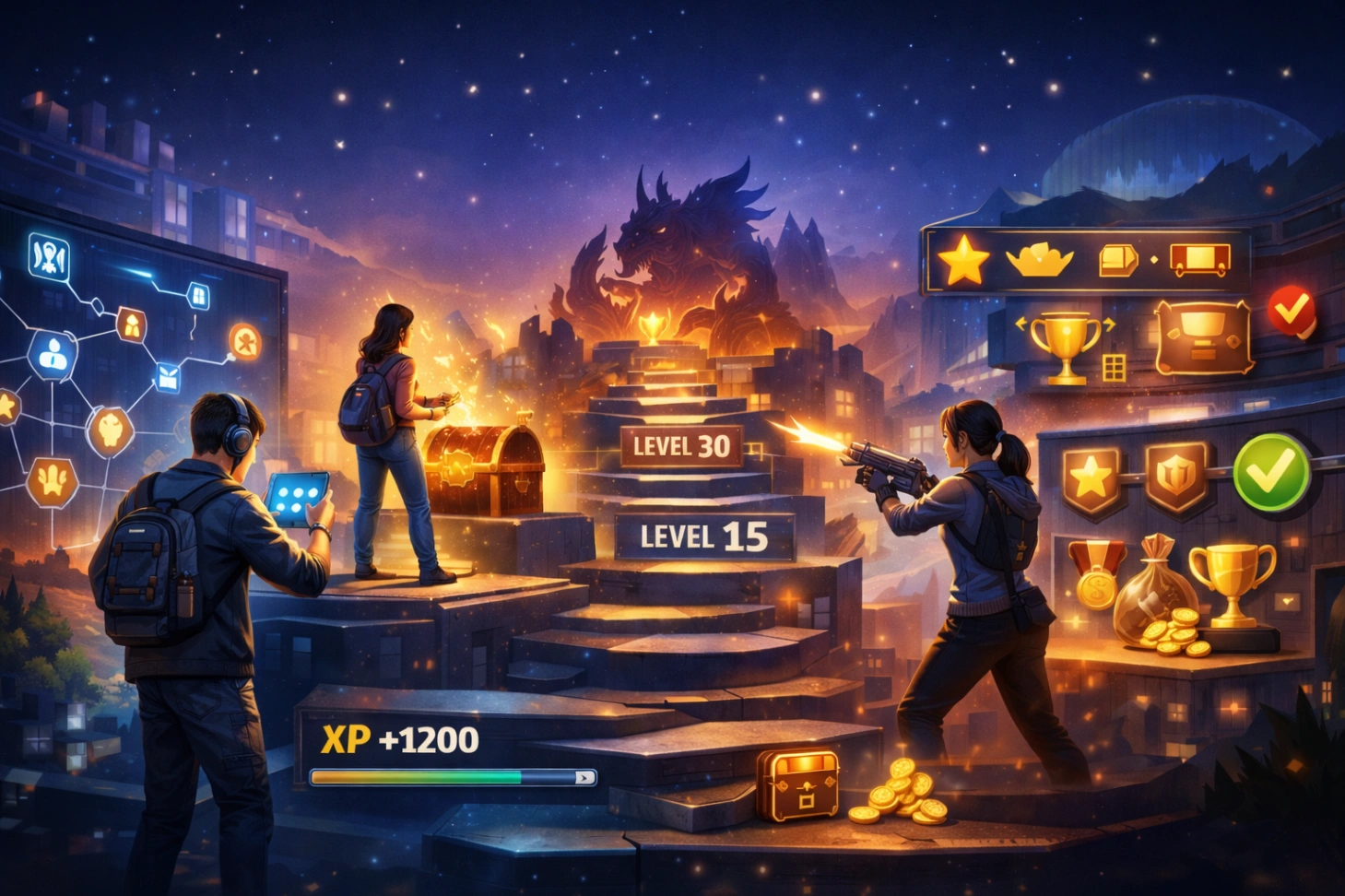
For example, leveling animations, sound effects, and progression bars provide constant, intuitive confirmation of growth. When integrated seamlessly, these elements make progression feel natural rather than forced, which enhances long-term satisfaction.
Reward Systems and Motivation
Reward systems are a core component of game progression systems. They can include new abilities, cosmetic enhancements, or narrative unlocks. The key is alignment: rewards must feel meaningful relative to effort. Overly frequent rewards can diminish impact, while sparse or arbitrary rewards may lead to frustration.
Psychological research suggests that players are motivated not just by extrinsic rewards but by the perception of growth. Well-structured game progression systems leverage this principle by providing a clear sense of achievement at each stage, balancing immediate gratification with long-term goals.
Common Pitfalls in Progression Design
Even experienced developers encounter challenges when designing progression. Overcomplicated systems can overwhelm players, whereas overly simplistic systems may fail to retain interest. Both extremes can harm engagement and reduce the perceived value of gameplay.
A frequent issue is unbalanced difficulty pacing. Without careful calibration, players may encounter abrupt spikes in challenge that feel unfair. Properly tuned game progression systems anticipate learning curves and gradually introduce complexity, maintaining a smooth and satisfying experience.
Another pitfall involves reward predictability. When players can anticipate every outcome, progression loses its motivational power. Designers can mitigate this by introducing controlled variability in rewards or branching objectives, keeping players curious and invested.
Integrating Progression with Gameplay Mechanics
Effective game progression systems do not exist in isolation—they integrate closely with core gameplay mechanics. For example, in strategy-based games, progression might unlock new units, abilities, or resources that influence how players approach challenges. In puzzle games, progression could gradually introduce new mechanics that expand problem-solving options.
This integration ensures that progression is meaningful. Players understand that growth is directly tied to their skill development and decision-making. Articles like Game Mechanics Explained: Powerful Core Systems That Truly Shape Modern Video Games further explore the interplay between mechanics and progression.
Progression Systems in Multiplayer Environments
While single-player games often control progression linearly, multiplayer and online games face unique challenges. In these contexts, game progression systems must balance individual growth with fairness across a diverse player base.
Ranking systems, matchmaking, and tiered rewards are common tools. When properly implemented, these mechanisms maintain challenge and reward without creating frustration or unfair advantages. They also reinforce community engagement by providing clear, measurable paths of advancement.
Moreover, multiplayer progression often incorporates cosmetic rewards or social recognition. These incentives encourage continued participation while ensuring that skill, rather than monetary investment, remains central to advancement.
Progression Across Player Archetypes
Modern game progression systems recognize that players have diverse motivations. Some prioritize mastery and challenge, while others enjoy exploration or narrative discovery. Designing progression that accommodates multiple archetypes increases accessibility and broadens appeal.
Adaptive systems, which adjust challenges and rewards based on player behavior, are increasingly popular. For instance, an exploratory player may unlock optional content that enriches the game world, whereas a mastery-focused player might encounter increasingly complex challenges tailored to their skill level.
Case Studies in Thoughtful Progression
Examining contemporary games reveals the impact of carefully structured progression. Well-designed systems blend incremental growth, optional challenges, and feedback loops to sustain engagement. By prioritizing meaningful advancement over arbitrary metrics, these games demonstrate how game progression systems can elevate the player experience.
For developers seeking inspiration, industry resources such as Gamasutra and Game Developer Magazine offer detailed analyses of progression mechanics in award-winning titles. These references provide insight into practical implementation strategies without disclosing sensitive intellectual property.
Ethical Considerations in Progression Design
As progression systems influence player behavior, ethical considerations are paramount. Designers must avoid manipulative mechanics that pressure spending or exploit psychological biases. Responsible game progression systems prioritize enjoyment, challenge, and skill development over monetization alone.
This approach fosters player trust and long-term satisfaction, aligning with AdSense-friendly content guidelines. By maintaining transparency and fairness, progression design contributes positively to the overall gaming ecosystem.
Future Directions in Progression Systems
Looking ahead, game progression systems will likely become increasingly adaptive, leveraging data analytics and AI to personalize growth paths. Developers may tailor difficulty, rewards, and narrative pacing to individual players, enhancing accessibility and engagement across diverse audiences.
Innovations in virtual reality and immersive experiences also open new possibilities. In VR environments, progression may rely more on experiential growth, spatial awareness, and skill mastery, creating highly personal and memorable gameplay journeys.
Conclusion
In summary, game progression systems form the backbone of player growth, guiding the journey from novice to expert while maintaining a sense of purpose and accomplishment. By combining structured challenges, meaningful rewards, and adaptive feedback, designers create experiences that feel both rewarding and intentional.
Well-crafted progression systems integrate seamlessly with mechanics, world design, and player motivation. They accommodate diverse playstyles, support ethical engagement, and elevate gameplay from a series of actions to a cohesive, meaningful journey. As game design continues to evolve, progression systems will remain central to crafting experiences that resonate deeply with players.
Understanding and applying these principles allows developers to create games that are not only technically impressive but also emotionally engaging. Thoughtful game progression systems ensure that every player feels a sense of growth, mastery, and satisfaction, laying the foundation for compelling and enduring gameplay experiences.
By analyzing progression alongside core mechanics and player engagement strategies, designers can refine experiences, maintain fairness, and deliver meaningful challenges. For more insights into player-centered design, refer to resources like Game Developer and Gamasutra, which explore practical applications in modern game development.